Bat Guano in the Attic: Risks, Cleanup, Insulation
- Pro Wildlife Removal
- Blog
Why this matters: Bat guano in the attic and the real risks to your home
If you have bat guano in the attic you are not just looking at a mess. Guano is a biological contaminant that can seed fungal spores that cause histoplasmosis and it soaks into insulation, wood, and HVAC components. If you need professional help with removal, start with a trusted local bat removal company like our wildlife removal services to confirm exclusion and scope the cleanup.
What bat guano actually does: health and structural impacts
Bat droppings break down into a fine dust that becomes airborne when disturbed. The Centers for Disease Control and Prevention documents that soils and droppings containing the fungus Histoplasma capsulatum can lead to histoplasmosis when spores are inhaled (CDC: Histoplasmosis). Beyond that, guano and urine can:
- Contaminate insulation, reducing R-value and making the material unsafe to handle.
- Corrode metal and stain wood, causing long-term cosmetic and structural damage.
- Infiltrate HVAC systems, spreading odor and spores through living spaces.
- Attract insects such as flies and bat bugs, creating secondary pest problems.
What homeowners and DIYers say: real experiences from community forums
Conversations on community forums reveal three recurring themes you should know before acting.
- Cost variability and sticker shock. Multiple homeowners reported exclusion and cleanup quotes ranging from about $2,000 for a basic exclusion to $6,000 or more for full remediation. One poster said a vendor quoted $5,000 for removal and another saw $6,000 for exclusion work.
- Cleanup method disagreements. Several users warned against simple vacuum-and-fog approaches and described specialists who insist on negative-pressure containment to prevent spores from entering the house during cleanup. Others said smaller, spot cleanups were done without expensive containment, creating confusion over best practice.
- Nightmare failure cases. At least one homeowner described a contractor that performed exclusion improperly and later required extensive remediation because guano and urine had spread into drywall and HVAC, driving replacement costs very high.
How professionals evaluate the attic: inspection checklist
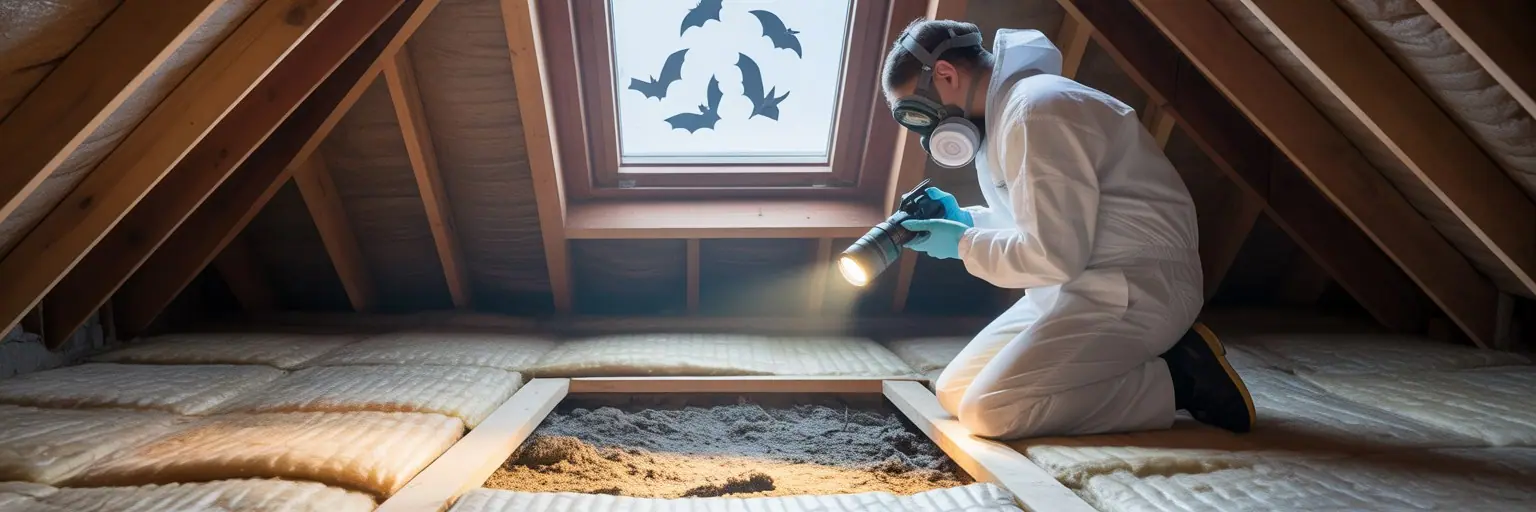
Before any cleanup begins, a qualified team should do a formal inspection. Key items they will check:
- Active bat entry points and evidence of current roosting (droppings, staining, live bats).
- Depth and distribution of guano and urine staining across joists, insulation, and framing.
- Signs of guano infiltration into HVAC ducts, air handler, or ceiling cavities.
- Presence of nesting insects or bat bugs that require concurrent pest treatment.
Cleanup options, pros, cons, and typical cost ranges
Below is a practical comparison of common cleanup approaches and ballpark cost ranges reported by homeowners and industry sources. Exact pricing depends on region, attic size, and whether HVAC and structural materials are contaminated.
| Approach | What it includes | When it is appropriate | Typical cost range (reported) |
|---|---|---|---|
| Spot vacuum and sanitize | Manual removal of shallow droppings, HEPA vacuuming, surface sanitizing | Small, localized deposits; no HVAC contamination | $300 to $1,500 |
| Negative-pressure containment cleanup | Containment tenting, negative-air machines, HEPA vacuums, PPE | Moderate to heavy guano, risk of spores spreading; families with health concerns | $1,500 to $10,000+ |
| Full remediation and reconstruction | Remove contaminated insulation, replace drywall, sanitize or replace HVAC, reconstruct | Extensive contamination into ceiling cavities, HVAC, or structural members | $5,000 to $50,000+ |
When to replace insulation versus when to sanitize and keep it
Deciding whether to replace insulation is one of the most common questions homeowners ask. Here are practical rules of thumb professionals use:
- Replace insulation when guano or urine soaks through to the insulation batt or blown layer, when the insulation is heavily compacted by droppings, or when HVAC contamination has distributed spores throughout the attic fill.
- Sanitize and retain insulation only when contamination is superficial and limited to isolated areas that can be removed without disturbing the bulk of the insulation, and when a negative-pressure cleanup can be performed safely.
Most experienced bat-removal pros advise replacement if more than a square few feet are contaminated or if odors persist after cleaning. For help estimating replacement scope and cost, see our detailed discussion on how much bat removal costs.
Why HVAC contamination matters
Several community reports noted severe outcomes when guano or urine contaminated ductwork or the air handler. Contaminated HVAC can distribute both odor and spores into living spaces, and remediation often requires duct cleaning, air handler sanitizing, or replacement. If condensate, odor, or staining reaches the HVAC, plan for separate HVAC work as part of remediation.
Timeline and seasonality: when to exclude bats
Legal protections and good practice influence timing. Bat colonies often have pups and legal restrictions prevent exclusion during maternity periods in many areas. Bat Conservation International recommends conducting exclusions outside the local maternity season to avoid trapping young bats inside (Bat Conservation International). That is why some homeowners asked whether to wait a few months for exclusion; delaying can be safer for bats but risks continued contamination, so consult a licensed bat professional about local timing.
Practical step-by-step plan if you find guano in your attic
- Keep occupants out of the house area beneath the attic and avoid disturbing the attic contents.
- Call a qualified bat-exclusion professional to verify active roosts and seal entry points humanely.
- Have the cleanup contractor perform an assessment for HVAC contamination and insulation replacement needs.
- If cleanup is required, insist on HEPA vacuuming and, for moderate to heavy contamination, negative-pressure containment.
- Replace contaminated insulation and repair any structural or drywall intrusion from urine staining.
- Confirm re-inspection after remediation and re-seal all entry points permanently.
What protective equipment and controls are recommended
For professionals doing heavy cleanup, Occupational Safety and Health Administration guidelines and general hazmat best practice call for HEPA-filtered vacuums, impermeable suits, gloves, and at minimum an N95 respirator; for heavy contamination, higher-level respiratory protection is used. The CDC warns that disturbing bat guano can aerosolize spores linked to histoplasmosis (CDC guidance), which is why DIY cleanup is discouraged for moderate or heavy contamination.
Comparison: DIY cleanup versus hiring specialists
- DIY may appear cheaper for very light, isolated guano, but it risks exposure and missed contamination in hidden cavities.
- Professionals bring containment equipment, HEPA filtration, documented protocols, and liability coverage. They also coordinate exclusion, cleanup, and insulation replacement so the problem does not return.
Cost-saving tips that do not cut safety corners
- Get multiple written estimates with detailed scopes so you compare identical services.
- Ask contractors for references and documented negative-pressure cleanup experience.
- Prioritize sealing all entry points first; some smaller cleanups after effective exclusion are less costly.
- Check whether targeted replacement of insulation in hot spots is acceptable rather than full attic re-insulation.
FAQs
How dangerous is bat guano in the attic for my family?
Bat guano can harbor Histoplasma spores that cause histoplasmosis when inhaled. Risk rises if guano is disturbed and aerosolized, or if HVAC spreads dust into living areas. People with weakened immune systems are at higher risk. For clear guidance, consult a professional and refer to the CDC’s histoplasmosis information.
Can I safely clean up bat guano myself?
For a few isolated droppings in a cold, well-ventilated attic, careful HEPA vacuuming with respiratory protection may be acceptable. For moderate to heavy accumulations, HVAC contamination, or uncertain scope, hire a contractor with negative-pressure containment. Community experience shows DIY attempts can spread contamination and create health risk.
When must I replace the insulation after guano contamination?
Replace insulation when droppings soak the material, when odors persist after cleaning, or when contamination is widespread. If guano only affects small, removable areas and negative-pressure cleaning is possible, some pros will sanitize rather than replace. Have a qualified inspector make the call.
Will insurance cover bat guano cleanup or insulation replacement?
Coverage varies widely. Many standard homeowners policies exclude damage from gradual contamination, but sudden damage from a covered peril may be eligible. Document the infestation, get contractor estimates, and contact your insurer. Several homeowners in forums reported mixed insurance outcomes.
How soon should I act if I discover guano?
Act promptly to prevent spread into HVAC and further structural staining. Start with a professional inspection and exclusion work. Delaying often increases cleanup scope and cost, as reported by homeowners who waited and later faced larger remediation bills.
Can bat exclusion be done any time of year?
Not always. Exclusion timing must account for local maternity seasons and wildlife protection laws. Your bat removal specialist should follow guidelines from wildlife authorities and organizations such as Bat Conservation International to avoid trapping young bats.
Conclusion
Finding bat guano in the attic is a warning you should not ignore. The risk to health and home increases the longer contamination remains. Start with a professional inspection to confirm active roosts, assess HVAC exposure, and plan exclusion and cleanup. For a trusted assessment and integrated exclusion, cleanup, and insulation guidance, contact our team via professional wildlife removal services or read more on who to call for bat removal and how much bat removal costs. Acting early will reduce health risk, protect your HVAC, and often save money in the long run.
Ready to schedule an inspection? Contact us for a no-obligation attic assessment and a written cleanup plan tailored to your home and risks.