Serving Tampa Bay & West-Central Florida
ARMADILLO REMOVAL & PROPERTY DAMAGE CONTROL
Professional Armadillo Removal in Tampa & West-Central Florida
Armadillos digging up your lawn or burrowing near your home? Fresh holes across the yard, disturbed mulch, nighttime digging or a burrow beside a foundation, patio, driveway, shed or deck can indicate active armadillo use. Pro Wildlife Removal provides professional armadillo inspection, trapping, damage assessment and prevention solutions across Tampa and West-Central Florida. The goal is not simply to catch an animal, but to determine where it is travelling, where it may be burrowing, whether the damage is from feeding or shelter, and what property changes may reduce recurring damage.
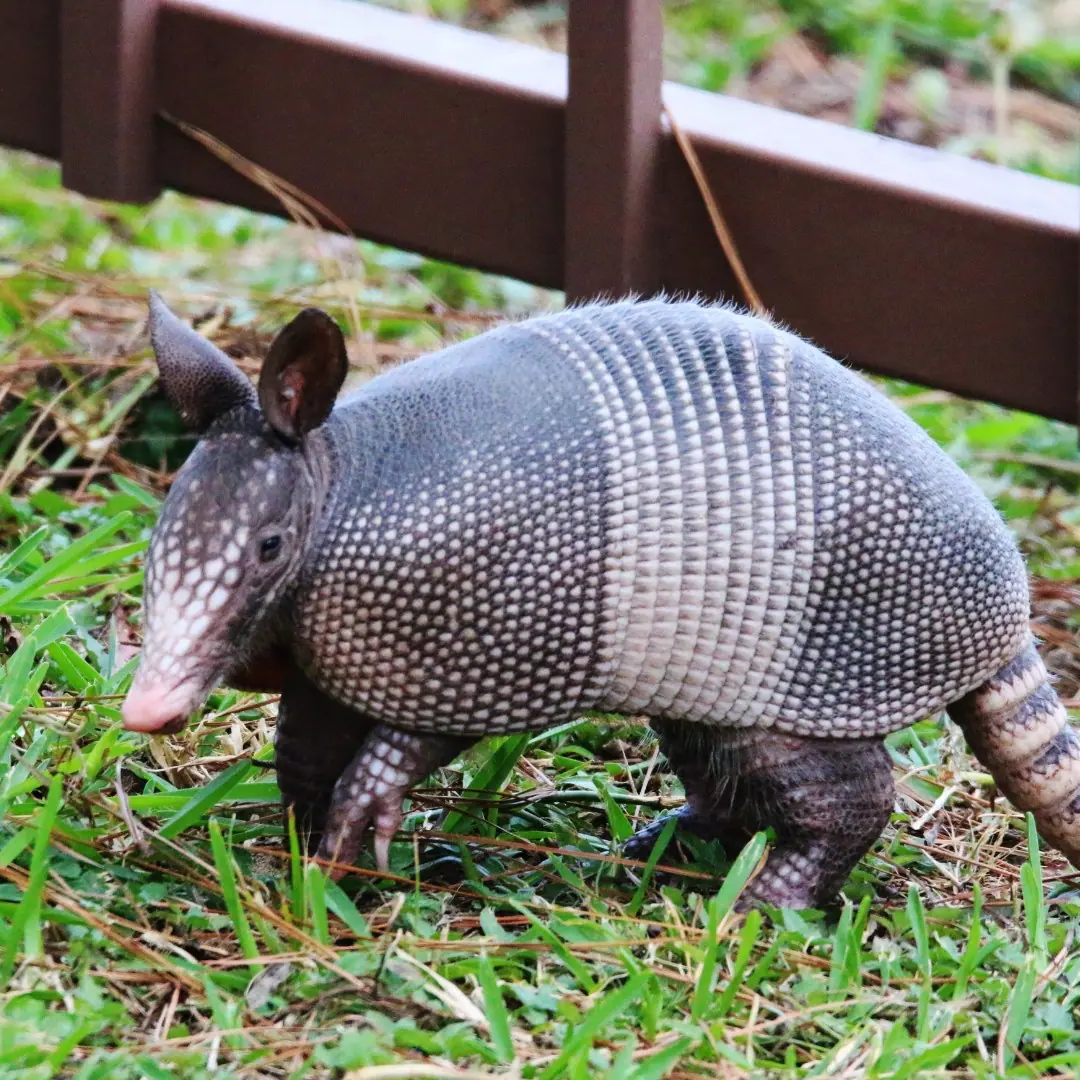
- Damage-First InspectionIdentify whether the problem is feeding damage, burrowing or another type of wildlife activity.
- Strategic ControlRemoval recommendations based on travel routes, burrows and actual property conditions.
- Burrow & Property AssessmentEvaluate active burrows, structural proximity and areas of recurring damage.
- Residential & CommercialArmadillo control for homes, HOAs, golf courses and managed landscapes.
Feeding Damage or an Armadillo Burrow?
A property with scattered feeding holes may require a very different strategy from a property with an active burrow immediately beside a structure.
Feeding Holes
SHALLOW AND SCATTERED
Feeding damage is usually shallow, scattered, numerous and spread across turf or landscaped areas, created while the animal searches for food in the soil.
Burrows
SHELTER SITES
Burrows are larger shelter sites used for resting, protection from weather and raising young. They may occur around foundations, patios, driveways, decks, sheds, brush, wood piles and dense landscaping.
WHY THEY DIG
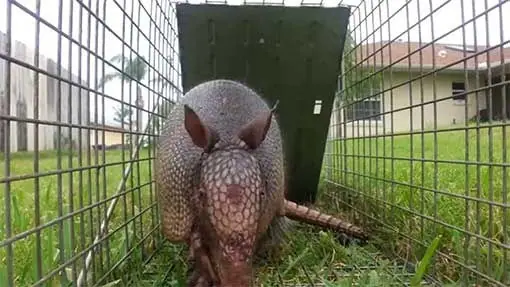
Why Is an Armadillo Digging Up Your Lawn?
Armadillos are usually not digging to destroy landscaping. They are typically searching for food in the soil or creating shelter.
Understanding whether the animal is foraging or using a burrow for shelter helps determine the right response. Even a healthy, attractive Florida lawn can become a feeding area.
- Earthworms
- Beetles
- Grubs
- Larvae
- Spiders
- Other small soil organisms
Why Armadillo Problems Occur Around West-Central Florida Properties
Armadillos are well established in Florida and commonly use suburban landscapes.
Moist Soil
Moist soil can support earthworms, larvae and other invertebrate prey.
Irrigated Lawns
Regular watering may create favorable feeding conditions.
Mulch & Landscaped Beds
Soft soil and organic material can support invertebrates and make digging easier.
Gardens
Soft soil and food sources can attract activity.
Dense Property Edges
Vegetation and cover can create travel routes and shelter.
Nearby Natural Areas
Wildlife corridors may bring armadillos close to residential and commercial landscapes.
Is an Armadillo Causing the Damage?
Armadillos are powerful diggers, but not every hole in a Florida lawn is caused by an armadillo.
Shallow Lawn Holes
Multiple small digging holes scattered across turf may indicate feeding activity.
Cone-Shaped or Irregular Divots
Freshly disturbed soil can appear where an armadillo has been searching for food.
Mulch & Flowerbed Disturbance
Soft landscaped areas may be turned over while the animal searches for insects and invertebrates.
Larger Burrow Openings
A shelter burrow is different from the smaller holes created during feeding.
Nighttime Digging
Armadillos are primarily nocturnal, so fresh damage may appear overnight.
Digging Along Structures or Edges
Repeated activity may occur near fences, buildings, patios, decks or landscaped borders.
Our Armadillo-Control Process
01
Inspect & Confirm Activity
We inspect feeding holes, burrows, travel paths, soil disturbance, structural proximity, landscaping, fences, watering patterns and other property conditions. Not every hole belongs to an armadillo, so identification comes first.
02
Determine the Control Strategy
The plan may involve trapping, burrow management, deterrence, barriers, habitat modification or other property-specific recommendations based on the conditions found.
03
Trap or Remove Where Appropriate
Where trapping is appropriate, placement is based on active burrows, travel routes, fence lines and repeated movement patterns. Armadillos do not respond reliably to conventional food bait, so placement matters more than bait.
04
Address Damage & Reduce Recurrence
Where appropriate, follow-up may include burrow management, lawn or soil restoration recommendations, irrigation adjustments, landscape changes, barriers and monitoring.
Can You Trap and Relocate an Armadillo in Florida?
Florida restricts how live-captured nuisance armadillos may be handled, so unrestricted relocation should not be assumed. We use armadillo-control methods appropriate to the property and applicable Florida nuisance-wildlife requirements.
NOT AS SIMPLE AS BAITING A CAGE
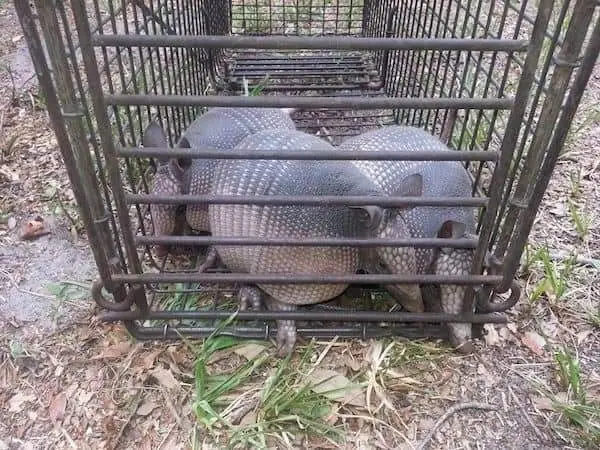
Why Isn't Armadillo Trapping as Simple as Baiting a Cage?
Armadillos do not behave like raccoons or opossums around food bait, and conventional baiting may be unreliable.
That is why property inspection and strategic placement matter more than claims about special bait or proprietary techniques.
- Burrow entrances
- Travel routes
- Fence lines
- Repeated movement patterns
- Property edges
- Funnel and trap positioning
Armadillo Burrowing Near Your House?
A burrow beside a foundation deserves more attention than scattered lawn feeding. Closing a burrow without understanding whether an animal is still using it can create unnecessary problems.
01
Whether the burrow appears active
02
Whether the animal is still using it
03
How close it is to the structure
04
Whether other openings exist
05
What removal or control method is appropriate
06
When the opening can safely be addressed
Don't immediately fill an active burrow.
AFTER THE ARMADILLO IS GONE
What Happens to the Yard After Armadillo Removal?
Removal alone may leave feeding holes, burrows, loose soil, damaged turf, disturbed mulch and damaged landscaping.
Where included in the service scope, follow-up work may involve the following. Only work that is actually part of the service should be expected.
- Burrow assessment
- Filling appropriate holes after activity has resolved
- Soil stabilization
- Turf and landscape recommendations
- Barrier installation
- Monitoring
How Much Does Armadillo Removal Cost?
Armadillo-removal pricing depends on the property and the scope of the activity.
Property Size & Activity Area
A small residential yard can require a very different strategy from a golf course or large HOA property.
Burrows & Travel Routes
The number and location of active burrows or recurring travel paths may affect the amount of work required.
Trapping & Monitoring
Trap placement, monitoring and repeated activity can influence the project scope.
Damage & Prevention Work
Barrier installation, damage restoration, soil and turf work and prevention recommendations may add to the overall scope where offered.
Armadillo Removal Cost in Florida
Simpler Armadillo Problem
One identifiable activity area, limited lawn damage, one active travel route, straightforward access and little or no restoration work.
More Complex Armadillo Problem
Multiple active areas, several burrows, a large landscaped property, foundation-side digging, golf course or HOA scope, significant turf damage, barrier work and repeated monitoring.
What Damage Can Armadillos Cause?
For armadillos, the strongest concern is usually property damage rather than simply seeing the animal.
Lawn Damage
Repeated foraging can create numerous holes across turf.
Flowerbeds & Gardens
Digging may disturb mulch, soil, plants and irrigation areas.
Patios & Driveways
Burrowing beneath or immediately beside hardscape may contribute to soil disturbance and structural concerns depending on the exact location and conditions.
Foundations
Burrows near foundations should be evaluated for their proximity to the structure.
Golf Courses & Managed Landscapes
Large turf areas can experience repeated maintenance problems from nighttime digging.
Pastures & Open Land
Burrows can create hazards in areas used by livestock or people.
Concerned about burrowing near a structure? Schedule an assessment.
Common Armadillo-Control Myths
"Kill the grubs and the armadillo will leave"
Reducing soil insects with insecticides has not been proven to reliably stop armadillo digging, so it should not be the primary strategy.
"Use a chemical repellent"
Miracle sprays, poison baits, chemical repellents, fumigants and ultrasonic devices are not proven armadillo solutions.
"Any fence will stop them"
Barriers can help in selected areas, but armadillos are strong diggers and ordinary surface-level fencing is not a guaranteed solution.
The stronger approach runs inspection, active-animal control, burrow management, barriers where practical, habitat modification and monitoring.
Armadillo Control for Homes & Managed Properties
Residential Properties
Lawn digging, flowerbed damage, burrows near foundations or beneath decks, shed activity, garden damage, patio and driveway concerns and repeated nighttime sightings.
HOAs & Communities
Recurring damage around common lawns, retention pond edges, clubhouse landscaping, walking paths, gardens, entrances and irrigated turf. A community-level plan focuses on where damage concentrates and where burrows and travel routes are.
Golf Courses & Commercial Landscapes
Large properties need activity-zone mapping and a property-level strategy rather than randomly placing traps across the site.
Armadillo Removal Across Tampa & West-Central Florida
Professional armadillo inspection and control across priority West-Central Florida markets.
- Tampa
- Temple Terrace
- Spring Hill
- Brooksville
- Weeki Wachee
- Timber Pines
- Hernando Beach
- Ridge Manor
- New Port Richey
- Trinity
- Wesley Chapel
- Land O’ Lakes
- Dade City
- Zephyrhills
- Hudson
- Holiday
- Odessa
Frequently Asked Questions About Armadillo Removal in Florida
Do you provide armadillo removal in Tampa?
Yes, for applicable properties in Tampa and other verified West-Central Florida service areas.
Why is an armadillo digging up my lawn?
Armadillos primarily dig while searching for insects, larvae, earthworms and other soil-dwelling invertebrates.
Are armadillos active at night?
Yes. Armadillos are primarily nocturnal.
What's the difference between a feeding hole and a burrow?
Feeding holes are smaller, shallow and scattered. Burrows are larger shelter sites used for resting and protection.
Can armadillos burrow under a house?
They may burrow near foundations, patios, driveways, decks and sheds.
Can burrows damage a driveway or patio?
Burrowing beneath or immediately beside structures can create soil disturbance and may contribute to structural concerns depending on the location and conditions.
Should I fill a burrow immediately?
It is better to first determine whether the burrow is active and whether an animal is still using it.
Can you trap an armadillo?
Yes, trapping may be used where appropriate, but armadillos can be difficult to capture and trap placement is important.
What bait works for armadillos?
Armadillos do not reliably respond to conventional food bait. Travel-route understanding and trap placement often matter more.
Can armadillos be relocated in Florida?
Florida restricts how live-captured nuisance armadillos may be handled. We use armadillo-control methods appropriate to the property and applicable Florida nuisance-wildlife requirements.
Do armadillo repellents work?
There are no registered chemical repellents, toxicants or fumigants for armadillo control in Florida.
Will killing grubs stop armadillos?
Not reliably. Reducing soil insects with insecticides has not been proven to consistently stop digging.
Can fencing stop armadillos?
Specially designed barriers may help in selected areas, but armadillos are strong diggers and ordinary fencing may not be sufficient.
Why do armadillos keep coming back?
Recurring food sources, suitable soil, shelter and established travel routes can keep a property attractive.
What do armadillo holes look like?
Feeding holes are commonly shallow and scattered across turf or landscaped areas, while burrow openings are noticeably larger.
Do armadillos carry leprosy?
Nine-banded armadillos are associated with the bacterium that causes Hansen's disease. Avoid unnecessary direct contact with armadillos, living or dead.
Does one armadillo mean an infestation?
Not necessarily. A single sighting does not automatically indicate a larger problem.
How much does armadillo removal cost?
Cost depends on the property size, number of activity zones, burrows, trapping requirements, monitoring and any restoration or prevention work.
Do you provide commercial armadillo removal?
Yes, where within our service capabilities. Service may be appropriate for HOAs, golf courses, managed landscapes and commercial properties.
What Customers Say About Pro Wildlife Removal
Cassandra Bronzo
★★★★★Brandon came out of his way to help remove a raccoon who had decided to use my front door mat for nap. Brandon was very polite and professional. He removed Ralph without issue and pretty quickly.
April Daves
★★★★★There's a first time for everything! Somehow a snake made it's way into our office building and chose my office to hang out. I called Pro Wildlife on Sunday and explained it to the tech. They arranged the appointment to come and remove it for today @ 9am. The tech Zak Brooks arrived and got the snake out very quickly! He was friendly and professional!! Definitely recommend and we'd use them again if needed! Thank you again!
Michelle Albers
★★★★★We have been having groups of raccoons wreak havoc on the plants and fountain in the backyard. Nelson came to help and he is amazing!! He is knowledgeable, professional, punctual on top of being a lovely animal whisperer! He kindly and humanely captured and relocated our raccoons and now we all can live well. He is the best!! Cant say enough about him and the service delivered!
Stop the Digging Before More of Your Property Is Disturbed
Whether you are waking up to fresh holes across the lawn or have discovered an active burrow beside a foundation, deck, patio or shed, the right first step is understanding what the armadillo is doing and where it is active. Pro Wildlife Removal can inspect the property, identify the activity and recommend a control and prevention plan based on the actual conditions found.
Serving verified communities across Hillsborough, Hernando, Pasco, Pinellas and surrounding West-Central Florida service areas.