Opossums Under House: Crawl Space Removal & Prevention
- Pro Wildlife Removal
- Blog
Why opossums under house deserve immediate attention
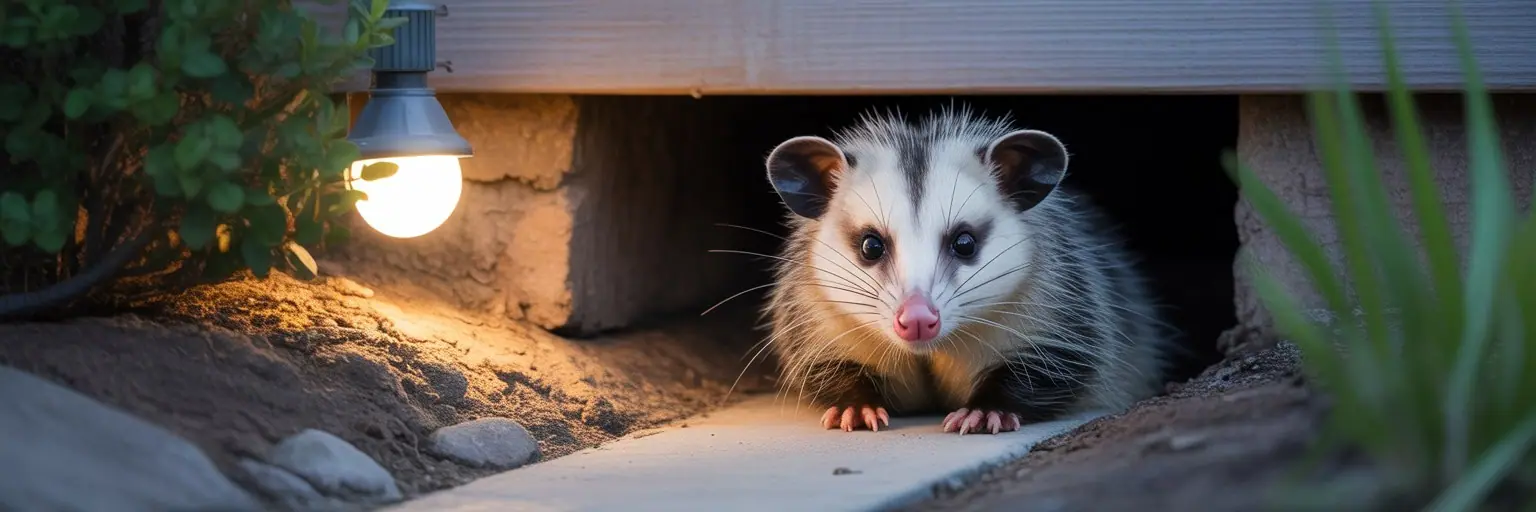
If you are finding opossums under house, you are not alone. Homeowners commonly discover nesting, foul smells, or the sound of young in crawl spaces and under porches. For structural removal, exclusion, and cleanup, contact our wildlife removal services so a licensed technician can inspect and give an itemized plan. Left untreated, a small opossum problem can create odors, attract fleas, and complicate repairs that raise long-term costs.
How opossums get under houses and why they stay
Opossums are adaptable, nocturnal marsupials that seek sheltered, dry spaces to rest and raise young. Common access points include broken foundation vents, gaps at skirting, loose siding, and gaps around HVAC or plumbing lines. Opossums will use crawl spaces as temporary dens in winter, birthing locations in spring, or as refuge when predators or heavy rain make surface cover unattractive.
Three reasons they stay:
- Shelter: Crawl spaces are dry and predator-safe compared with exposed brush.
- Food nearby: Accessible trash, pet food left outdoors, and compost piles make the area attractive.
- Multiple access points: If there is more than one opening, exclusion attempts frequently fail, leaving animals inside or allowing reentry.
One homeowner on Reddit reported a persistent bad smell described as a sewage or rotting odor that tracked to their basement wall and suspected opossums under a nearby porch. That example is typical of situations where either a carcass or heavy soiling is present and should trigger an immediate inspection.
Signs you have opossums under the house
Look for a combination of signs rather than a single indicator.
- Odd nocturnal noises under floors: scratching, sneezing or quiet huffing sounds.
- Faint musky or rotten-smelling odors near crawl space vents or ground-level windows.
- Tracks or scat near foundation vents and under porches.
- Fleas, ticks, or sudden pet bites showing up after an infestation. Community reports show owners often find fleas spreading rapidly within days of a nest being present.
- Visible mother carrying young or seeing baby opossums at a crawl space vent; Reddit users worry about leaving babies behind if the mother is blocked out.
Risks and myths: what opossums actually do and do not do
Opossums are often misunderstood. They eat ticks, rodents, and garden pests, which can be beneficial. They are not major structural chewers like raccoons. Still, problems occur when they nest in contact with insulation, wiring, or near HVAC ducts.
- Health risks: Opossums can carry fleas and ticks that affect pets and people. The Centers for Disease Control and Prevention notes fleas transmit several pathogens to humans and animals, so infestation requires attention and sanitation.
- Smell and dead animals: A Reddit homeowner described a sewage-like odor that turned out to be animal-related. Decomposition or concentrated urine in insulation can cause persistent odors and require professional attic or crawl space cleaning.
- Legal and humane issues: Trapping and relocating wildlife is regulated in many states. Check state wildlife guidance or hire professionals who follow legal, humane protocols.
Immediate steps to take if you suspect opossums under house
Act quickly and safely. Follow this sequence to reduce the chance of leaving young behind or causing animals to become trapped inside.
- Keep people and pets away from crawl space access. Contain pets indoors if fleas or ticks are already present.
- Schedule a licensed inspection so entry points can be mapped and the presence of young assessed. Our team’s inspection services are described in What to Expect from a Wildlife Removal Inspection.
- Do not seal access points until you are certain no young are trapped inside or until a professional has used a proper exclusion sequence.
- If you detect foul odor or see dead animals, request sanitation and decontamination in the same visit to prevent ongoing odors and flea problems.
Request a Crawl Space Inspection
Cost comparison: opossum crawl space removal and related services
Costs vary widely by location, number of animals, and whether insulation or wiring needs repair. The table below compares typical services and ranges based on industry surveys and real homeowner quotes collected from community forums.
| Service | Typical cost range | Notes |
|---|---|---|
| Inspection and live removal | $150 to $450 | One-time visit to assess and remove adults; excludes cleanup |
| Crawl space cleanup and deodorization | $300 to $1,200 | HEPA vacuuming, antimicrobial treatment, odor control |
| Insulation replacement (contaminated) | $2.50 to $6 per sq ft | Many homeowners find full removal required if insulation is saturated |
| Exclusion repairs and sealing | $200 to $1,200 | Depends on number of entry points and foundation access |
| Pheromone or deterrent treatment | Quoted example: $500 | One Reddit user shared a $500 pheromone treatment quote; effectiveness varies |
Comparison: opossum vs raccoon vs feral cat in crawl space
Use this quick comparison when you are trying to identify the animal by damage and behaviors.
| Feature | Opossum | Raccoon | Feral cat |
|---|---|---|---|
| Damage tendency | Low; may soil insulation | High; tear vents, soffits, wiring risk | Moderate; may nest, scratch wood |
| Noise pattern | Quiet squeaks, sneezes | Loud thumps, vocalizations | Meowing, scratching |
| Health pests | Fleas, ticks | Fleas, parasites | Fleas, toxoplasma risk with handling |
| Removal difficulty | Low to moderate | High | Moderate; trap and removal may be needed |
Why DIY exclusion under houses often fails
Reddit threads show recurring problems when homeowners attempt do-it-yourself exclusions under houses. One user built a one-way exclusion door and reported it never triggered, indicating either multiple access points or an animal that had stopped using that opening. Another user described sealing an entrance only to find trapped young inside, which led to carcass odor and larger cleanup bills. For these reasons, professional sequencing is important: inspect, confirm the absence of young, install one-way devices if appropriate, then seal permanently.
For broader context on why professional exclusion is preferred, see our post on wildlife exclusion versus trapping.
What a professional removal and cleanup visit should include
Choose a licensed provider that offers a written scope. A complete service should include:
- Detailed inspection with photos and map of all access points.
- Humane removal or one-way exclusion timed to avoid leaving young trapped.
- HEPA vacuuming, antimicrobial treatment, and odor control if contamination exists.
- Repair and sealing of all identified entry points with durable materials and a warranty.
- Follow-up inspection to confirm exclusion success.
Our service process follows these steps and is described in more detail on our inspection page at what to expect during an inspection.
Prevention checklist to keep opossums away
Long-term prevention focuses on habitat modification.
- Secure trash and compost bins with tight lids and elevated stands.
- Remove pet food and bird seed from open yards at night.
- Seal foundation vents, gaps around pipes, and loose skirting with hardware cloth and metal flashing.
- Trim vegetation that creates cover near the house and keep the yard tidy to reduce hiding spots.
- Repair broken screens and fix low-lying siding or deteriorated skirting promptly.
Frequently Asked Questions
Will the babies die if I block the mother out of the crawl space?
This is the most common, urgent worry. If young are present and too small to leave the nest, blocking the mother will likely result in abandonment and death. A professional inspection can determine the ages of the young and the correct exclusion timing. Several homeowners on Reddit reported facing this exact dilemma and were advised to have a licensed remover assess and, if needed, temporarily allow the mother access until juveniles can disperse.
How do I safely get opossums out of my crawl space?
Do not attempt to seal openings while animals are inside. The safe approach is inspection, humane eviction or trapping by licensed pros if local law requires trapping, and then exclusion. Professionals use one-way doors where appropriate and verify juveniles have left before permanent sealing. For guidance on humane approaches, see our article on how to get rid of opossums.
Do opossums bring fleas and how do I stop fleas from spreading indoors?
Yes. Opossums commonly carry fleas and ticks. If fleas are detected inside the home, treat pets and living areas and request professional flea remediation alongside crawl space cleanup. The CDC recommends integrated pest control for vector reduction and treating animals with veterinarian-approved products.
Can a one-way exclusion door work under a house?
One-way doors can succeed, but community reports show they fail if there are multiple access points or if the animal is not using that particular opening. A thorough inspection and temporary monitoring are required. If you build a DIY exclusion, be prepared to check carefully and leave a gap until you confirm the animal is gone.
Is it safe to use chemical repellents or pheromones around a crawl space?
Some homeowners reported paying for pheromone treatments, with one Reddit poster quoting $500. Effectiveness is mixed. Repellents can work short term but do not replace sealing entry points and removing attractants. If you have pets or local wildlife regulations, consult professionals before applying chemicals.
How much should I expect to budget for a full removal, cleanup, and exclusion job?
Budget ranges from a few hundred dollars for small, simple jobs to several thousand when insulation replacement or structural repairs are needed. Typical total jobs often fall between $700 and $4,000 depending on contamination, repairs, and local labor rates. Ask for an itemized quote that separates inspection, removal, cleanup, insulation work, and repairs.
Conclusion
Finding opossums under house is a common but solvable problem. Prioritize a licensed inspection so technicians can confirm whether young are present, eliminate fleas and contaminants, and seal all entry points correctly. Quick, professional action reduces long-term odor, health, and repair costs and prevents repeat visits. If you want a site-specific estimate and humane removal, contact our team for a timed inspection and an itemized plan.
Schedule an Inspection Today
Further reading and references: CDC on fleas and vector control: cdc.gov/fleas. National Wildlife Federation species overview: nwf.org. For DIY risks and why to call a pro, see our guide The Dangers of DIY Wildlife Removal.
Meta description: Find practical, local solutions when you have opossums under house. Learn inspection steps, costs, prevention, and humane removal options. Schedule a professional inspection today.