Raccoon Noises at Night
- Pro Wildlife Removal
- Blog
Why raccoon noises at night demand a fast, practical response
If you wake to persistent scratching, thumping, or scurrying above your ceiling, raccoon noises at night are a common cause and a real risk to your home and health. Homeowners who ignore repeated nocturnal sounds often discover shredded insulation, chewed wiring, and lingering odors that require costly cleanup. Early recognition and the right next steps can save money and reduce the chance of trapped young animals or structural damage.
How to tell raccoon noises at night from other attic animals
Sound matters. Raccoons produce a range of nocturnal noises that differ from rodents and birds. Use these audio clues when you are trying to decide whether to inspect or call a professional.
- Thumping and heavy steps: Raccoons are roughly the size of small dogs and often walk with weight that makes heavy, deliberate thumps on roof decking or attic joists. This is different from the light scurrying of rats.
- Scratching and tearing: When raccoons make nest sites they rip and shred insulation, which sounds like active, repeated scratching rather than rapid gnawing.
- Vocalizations: Kits and adults emit a mix of chirps, purrs, and chittering. Homeowners commonly report animal cries that sound like a small animal in distress rather than the high-pitched squeaks of mice.
- Timing: Raccoons are nocturnal. If noises consistently occur after dusk and before dawn, raccoons belong high on the list of suspects.
What those sounds usually mean for your house
Raccoon noises at night are an early symptom of one of three situations: a transient roof visitor, a denning pair with kits, or an established family living inside the attic. Each scenario requires a different response. Several documented service reports list inspection fees from $75 to $250, while community-reported single removal visits often cost around $250. For severe contamination some homeowners reported attic sanitation and insulation replacement costs reaching $11,000 on extreme jobs. Those numbers explain why acting quickly, but correctly, matters.
Immediate safety steps when you hear raccoon noises at night
Do these first. They are low effort and reduce risk to people and pets.
- Limit access: Keep children and pets out of rooms under the active area. Raccoons can become defensive if surprised.
- Close attic access doors if you can do so safely: Do not block exterior exits or seal vents while animals may be inside.
- Document the activity: Record short videos or notes about time of night, sound type, and location. This helps the inspector identify entry points and occupancy.
- Turn off HVAC if you smell strong ammonia or foul odors: Running ducts can spread contamination through the house.
- Secure attractants: Bring pet food and trash bins indoors and remove bird seed to reduce repeated visits.
How professionals diagnose the cause of nocturnal noises
A licensed wildlife professional uses a three-step process: inspection, occupancy testing, and targeted exclusion. Inspections look for entry points such as torn soffits, uncapped chimneys, and loose vent boots. Occupancy checks may include daytime observation, camera surveys, or remote listening to confirm whether kits or adults are present. Recommendations commonly separate costs for inspection, removal, exclusion repairs, and sanitation so you can compare quotes transparently.
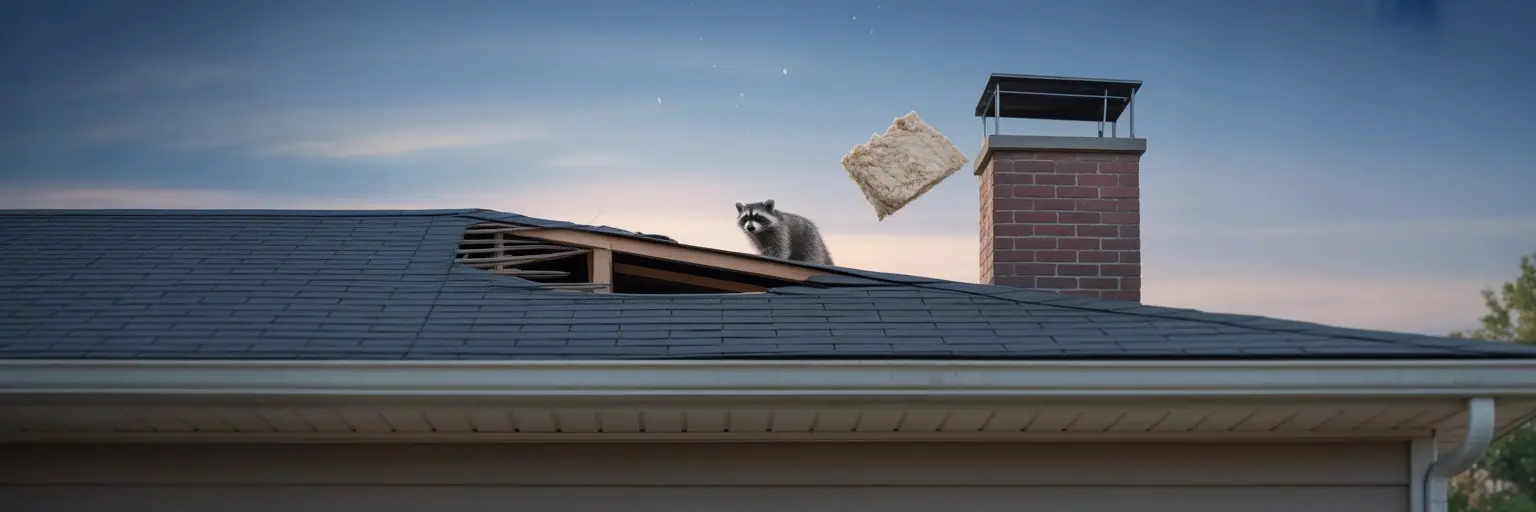
On documented jobs professionals often find surprising details. One reported homeowner traced repeated attic visits to an apple tree about 15 feet from the roofline. Another community account described resolving a persistent return simply by capping a chimney and repairing a small soffit gap that a roofer had missed.
Common entry points that cause nocturnal noises
Understanding how raccoons enter is the fastest way to stop the sounds. Use this checklist when you or a technician inspects the roofline and attic.
- Soffits and fascia gaps: Raccoons pry open weak soffits to access cavities. Look for torn or sagging material around eaves.
- Uncovered chimneys and flues: An uncapped chimney is a direct corridor into the attic space.
- Roof vent boots and loose shingles: Small gaps around plumbing vents and roof junctions are easy for animals to exploit.
- Porches and crawl space gaps: Loose siding or gaps under porches can lead animals into wall cavities and then into attic spaces.
What to expect from removal and exclusion work
Effective work is staged. First remove animals humanely while respecting local regulations. Then perform permanent exclusion repairs on every identified gap. Finally, handle contamination. A reliable provider will itemize these steps and offer a monitoring window to confirm success.
- Removal: Trapping or one-way exclusion devices are used depending on occupancy and local law.
- Exclusion repairs: Hardware cloth, metal flashing, and new vent screens are typical materials to permanently block access.
- Sanitation: If droppings, urine, or nesting material are present, insulation removal and HVAC duct cleaning might be necessary to restore a safe environment.
Realistic timelines and cost signals
Community-sourced ranges help you budget. Inspections are often same day to one week. Removal can be completed in one to 14 days depending on strategy. Exclusion repairs typically take one to seven days. Costs vary by damage scope. For targeted work expect low hundreds to low thousands of dollars. For full sanitation and insulation replacement some homeowners reported figures up to $11,000 in severe contamination cases. Get itemized quotes so you can compare each service line.
DIY actions that actually reduce risk while you wait
You can reduce attractants and document evidence without sealing holes prematurely. Safe steps include securing trash, trimming tree branches away from rooflines to limit animal access, and replacing broken vent screens with metal mesh. Avoid sealing entry points if animals might still be inside. Several community reports emphasize that passive sealing can trap kits and lead to decomposing animals in cavities, which creates a worse cleanup problem.
When the noise pattern becomes an emergency
Call a professional immediately if you notice chewed wiring, circuit problems, brown stains showing through ceilings, persistent ammonia smells, or loud thumping that suggests structural failure. These signs indicate hazards beyond nuisance noise and justify urgent inspection and service.
Frequently Asked Questions
Why do raccoons make thumping noises at night?
Raccoons are heavy foragers and they walk with enough weight to create audible thumps on roof decking and attic joists. Thumping often means animals are moving across the attic rather than remaining in a single nest. If thumping increases or becomes irregular, structural inspection is advised.
How can I tell if the raccoon noises at night mean there are babies inside?
Kits create distinct sounds such as high-pitched chirps or repetitive cries, and adults may vocalize frequently during breeding season. If you hear consistent crying during daytime or find nesting material, a professional should check before any exclusion work to avoid separating young from mothers.
Are raccoon noises at night dangerous to my family?
Raccoons can carry parasites and pathogens, and damage to insulation or wiring raises health and fire risks. If you suspect contamination or smell strong ammonia, avoid running HVAC and schedule an inspection and possible sanitation. Vulnerable household members warrant faster action.
Will playing loud sounds or lights remove raccoons from my attic?
Some homeowners report short-term success using sound deterrents or motion-activated lights. These methods can encourage animals to leave temporarily, but they rarely solve the root problem if entry points remain. Use deterrents only as a short-term measure while you arrange a professional exclusion plan.
How long before raccoons return after removal?
Return depends on whether all entry points are sealed and whether food attractants remain. Community reports show that animals often return within weeks if even one small gap is left unsealed. Permanent exclusion and removing attractants are essential to prevent recurrence.
When should I call a licensed wildlife removal service?
Call a professional when you hear regular nocturnal noises, find chewed insulation, detect wiring damage, or notice odors. A documented inspection will identify entry points, occupancy, and contamination and provide a transparent quote for removal, exclusion, and cleanup.
Conclusion
Raccoon noises at night are a clear early warning that a coordinated response is needed. Listen for heavy thumps, tearing sounds, and kit vocalizations. Take immediate safety steps, document the activity, and schedule a professional inspection that separates removal, exclusion, and sanitation into clear line items. Acting correctly the first time reduces the chance of repeated visits and expensive remediation later.
For guidance on specific entry points and repair expectations, see the detailed resources on how raccoons enter homes and why they choose attics at a href=”https://prowildliferemoval.net/blog/how-raccoons-enter-homes/”>How Raccoons Enter Homes and a href=”https://prowildliferemoval.net/blog/raccoons-in-attic-why-they-choose-your-home-guide/”>Why Raccoons Choose Attics. If you need a cost breakdown for roof damage and cleanup, review the itemized examples at a href=”https://prowildliferemoval.net/blog/raccoon-roof-damage-complete-cleanup-costs/”>Raccoon Roof Damage and Cleanup Costs.