Why Squirrels Return After Removal
- Taroneh homberg
- Blog
Why squirrels return after removal
If you have removed squirrels from an attic or soffit only to hear them again weeks later, you are not alone. The phrase “squirrels return after removal” captures a common homeowner frustration that often stems from a few predictable failures: missed entry points, lingering nest scent and debris, seasonal breeding, or damage that still makes the attic attractive. Community reports compiled on the site include homeowner bills and contractor quotes that show what happens when a partial fix fails. One homeowner shared a follow-up remediation bill near $4,500 after an initial, incomplete attempt. Other public estimates for full attic remediation have ranged from $3,000 to $12,500+ depending on contamination and repairs.
Common reasons squirrels come back
Understanding the actual mechanisms will help you decide what to fix first.
- Missed entry points: Squirrels exploit small roofline gaps, torn vent screens, or gaps around utility penetrations. If the original entry is not found and sealed, other squirrels will use the same route.
- Nest site fidelity and scent cues: Squirrels leave nesting material, urine, and pheromone traces. Those scent cues attract new or returning squirrels until the area is cleaned. Sanitation is as important as sealing.
- Food and shelter still available: Stored birdseed, unsecured trash, or nearby fruit trees keep the site attractive. Even a well-sealed attic can be reoccupied if a new breach appears.
- Young left behind: One-way exclusions or trapping done without timing checks can leave juveniles inside. The mother returns or other squirrels enter to investigate young, which creates repeated activity.
- Structural or insulation damage: Shredded insulation and damaged soffits provide ready-made nesting material. See our detailed analysis of how insulation damage plays into repeat problems at squirrel insulation damage.
- Intermittent repairs: Temporary fixes that use soft materials or paint-over gaps fail when squirrels chew or pry them back open. Durable metal mesh and flashing are standard for lasting exclusion.
How professionals stop squirrels from coming back
Effective removal is a sequence, not a single action. Professionals focus on three parallel goals: remove animals humanely, eliminate attractants and scent cues, and permanently seal every access route. The site’s exclusion and exclusion-vs-trapping guides explain why sealing plus sanitation reduces recurrence more than trapping alone: documented figures for similar attic pests show reinfestation risks drop to roughly 10 to 20 percent with proper exclusion and follow-up, compared with 50 to 80 percent for piecemeal baiting or DIY effort that misses access points.
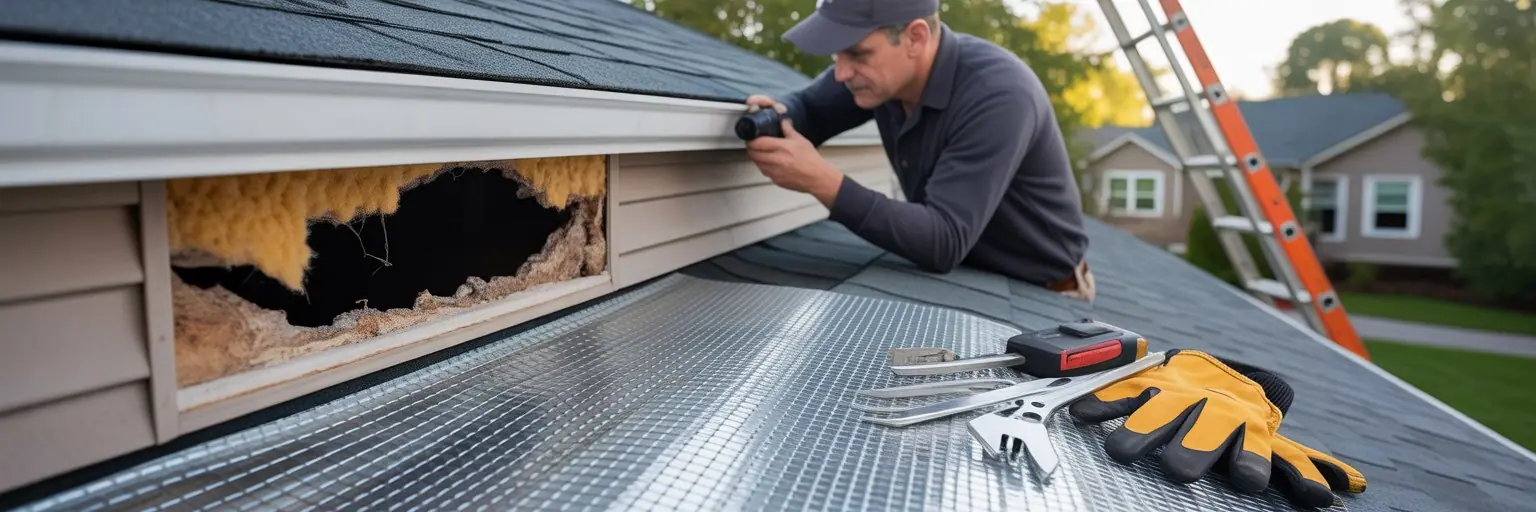
- Inspection and mapping: Technicians map runways, chew patterns, and droppings to locate primary and secondary entry points. Photographic documentation prevents missed gaps.
- Humane removal timed to biology: Professionals verify there are no dependent young before exclusion or use methods that allow removal without leaving juveniles behind.
- Sanitation and insulation decisions: Contaminated insulation is either cleaned or removed. When urine and droppings are present near HVAC or ductwork, sanitation often includes partial or full replacement. For details on typical costs and when replacement is required, see the attic insulation coverage at squirrel insulation damage.
- Durable sealing: Use galvanized mesh, sheet metal flashing, and sealed vent screens. Soft fillers will fail once squirrels test them.
- Follow-up verification: A second check after two to four weeks catches any missed entry points and confirms the exclusion holds.
Why wiring and duct issues matter
Squirrels frequently chew wiring and duct jacketing. Exposed wiring is a fire risk and contaminated ducts circulate odors that attract wildlife. Our guide on wiring explains how chewed electrical lines increase hazard and why coordination with an electrician is often the first step. See the wiring guide at squirrels chewing wires expert guide.
Step-by-step checklist to prevent return
Use this checklist when you plan repairs or interview contractors. Each line ties to a failure mode that commonly lets squirrels come back.
- Confirm activity and species: An inspection that identifies squirrel behavior and whether young are present prevents bad timing or incomplete exclusions.
- Document and photograph every entry point: Require the contractor to show before-and-after photos for each seal. Hidden gaps behind fascia and soffits are common misses.
- Remove nest material and contaminated insulation: If urine, droppings, or nesting fill are present near HVAC, plan for removal. Partial cleaning without removing contaminated fill usually fails.
- Install durable exclusion hardware: Use metal mesh, flashing, and professionally sealed vents rather than temporary caulk or foam.
- Eliminate food attractants: Secure bird feeders, put trash in closed bins, and trim tree limbs that give direct roof access.
- Schedule follow-up inspections: Ask for a two-visit warranty window so the company returns to verify results and correct any misses.
When to call a pro and expected costs
Small, obvious gaps can sometimes be sealed by a competent homeowner, but wiring, HVAC contamination, or full-attic insulation damage requires licensed trades and coordinated work. The site gathers contractor ranges to set realistic expectations: targeted spot repairs and exclusion typically start in the $300 to $1,500 range. Partial insulation removal is often quoted at about $6 to $10 per square foot. Full attic remediation with sanitation, wiring repair, and a new insulation install can run from around $3,000 to $12,500+. Those figures reflect case reports and contractor price ranges posted on community pages.
If you tried a DIY removal and the problem returned, expect a thorough inspection to identify missed entry points and contamination that was not obvious. One documented local example showed an escalation to near $4,500 after an initial attempt failed to address wiring and hidden gaps.
When you request quotes, ask for an itemized scope that separates inspection, exclusion labor, materials, insulation work, electrical repairs, and sanitation. That makes comparison meaningful and shows whether the contractor expects to coordinate with electricians or HVAC technicians.
Frequently Asked Questions
Why do squirrels keep coming back after I remove them?
They usually return because the root causes were not fixed. Common misses are hidden access points, lingering nest scent and debris, and nearby food or shelter that still makes your attic attractive. If young were present, a mother may return or other squirrels may investigate the nest. A professional inspection that documents every entry point and performs sanitation is the reliable fix.
Will sealing entry points stop squirrels for good?
Sealing is essential, but it must be complete and durable. Temporary materials or paint-over repairs fail when squirrels test them. Sanitation to remove scent cues and removing nesting materials are equally important. Combined, durable sealing and sanitation reduce the chance of return to the low end of typical reinfestation ranges.
Do one-way exclusion devices work for squirrels?
One-way devices can work when timed correctly and installed on the correct opening. The device must allow animals to exit and not trap young inside. Professionals verify there are no dependent pups before installation or use live-capture methods when needed. Improper use of one-way devices is a common cause of repeat activity.
How long after repairs should I expect no more activity?
After a complete exclusion and sanitation, most homeowners see activity stop within a few days to two weeks. If activity continues past the warranty follow-up, it usually indicates an unsealed secondary entry point or nearby attractant. Schedule a verification visit if you still hear noise after two weeks.
When is insulation replacement necessary?
Replace insulation when it is soiled, matted, or compressed by nests, or when contamination reached HVAC intakes or ductwork. Partial cleaning can work for isolated, dry patches, but widespread contamination typically requires removal and replacement to restore R-value and indoor air quality.
How do I choose the right contractor?
Choose a company that provides itemized, written estimates with before-and-after photos, coordinates licensed electricians and HVAC technicians when needed, and offers a warranty for exclusion work. Local references and documented job photos are strong indicators of competence.
Conclusion
When squirrels return after removal, the cause is almost always a mix of missed access, lingering scents and debris, or remaining attractants. Treating symptoms by trapping without cleaning and sealing is what leads to repeat problems and rising costs. Use a documented inspection, durable sealing hardware, and proper sanitation to reduce the chance of reinfestation. If you are facing wiring damage or extensive insulation contamination, refer to our wiring and insulation resources and get itemized quotes that separate exclusion, sanitation, and trade work. Stopping squirrels permanently requires addressing both access and habitat.
For more detail on insulation damage and wiring hazards caused by squirrels see the detailed guides at squirrel insulation damage and squirrels chewing wires expert guide. If you want guidance on whether to patch, replace, or fully remediate, request an inspection that documents entry points and contamination.