Bat Colonies Attic Removal: Complete Costs, Risks, Cleanup
- Pro Wildlife Removal
- Blog
Why bat colonies attic problems deserve fast action
If you found droppings on your soffit or hear fluttering at dusk, bat colonies attic infestations can cause structural damage, foul odors, and health risks. Homeowners who wait often face larger bills. One homeowner on a public forum reported contractor estimates between $2,000 and $6,000 to remove two colonies and repair attic access points, which matches the range experienced in our service area. This page explains how attic bat colonies behave, what the real costs look like, and how a documented inspection plus professional exclusion protects your home and household.
How to identify an attic bat colony
Early detection reduces both damage and cleanup costs. Look for these reliable signs that point to an attic bat colony:
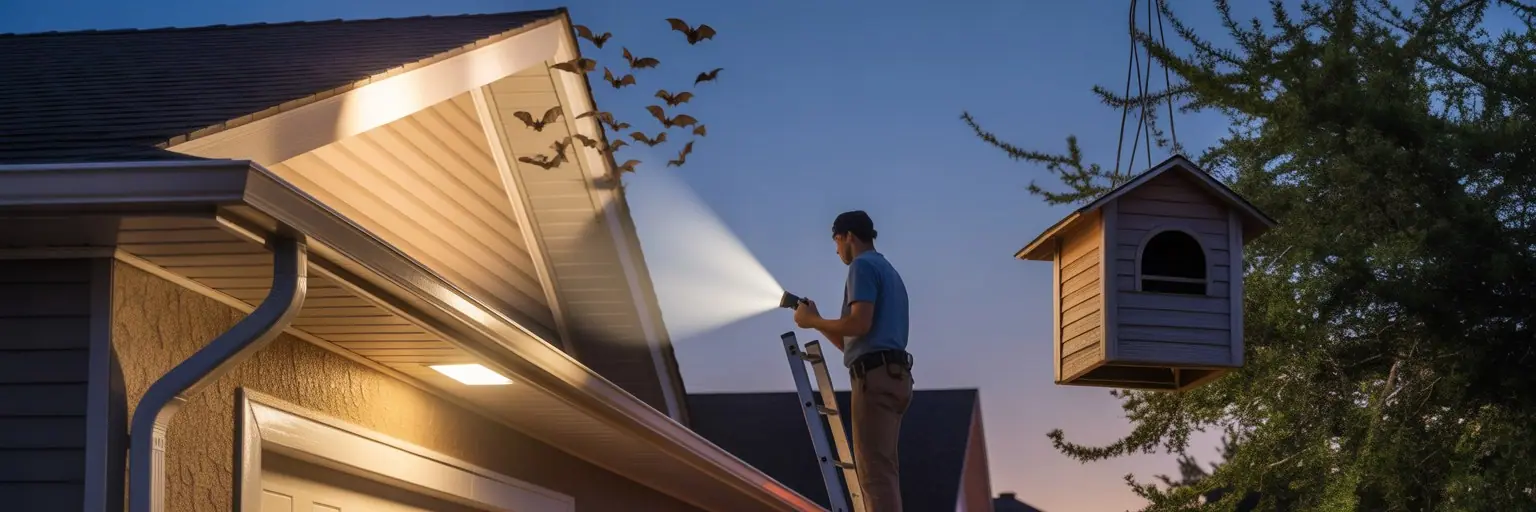
- Evening exits: A steady stream of bats leaving near dusk from a single roofline or soffit.
- Guano deposits: Accumulations of small, dark droppings on decks, gutters, or attic flooring. See our in-depth guide on bat guano in the attic for cleanup thresholds and remediation tips.
- Stains and grease marks: Dark streaks around mortar joints, chimney crowns, vents, and soffits where bats repeatedly enter and exit.
- Strong ammonia odor: Persistent smell that worsens in warm weather is a common sign of long-term occupancy.
- Noise and rustling: Activity inside the attic at night, especially during maternity season when colonies are largest.
Health risks and why guano matters
Bat guano carries pathogens and can support fungus that can be harmful to people. The U.S. Centers for Disease Control and Prevention documents the risk of histoplasmosis as an occupational and residential hazard when spores from bat and bird droppings are inhaled during disturbance or cleanup. If you plan any attic access, avoid stirring up dust and wear appropriate respiratory protection. Professional sanitation for heavily contaminated attics is often required to reduce airborne spore exposure and to protect HVAC systems from spreading contaminated dust.
Legal protections and conservation considerations
Several bat species are protected under state and federal guidelines. The U.S. Fish and Wildlife Service explains that exclusions during maternity season are restricted in many jurisdictions to avoid separating pups from mothers. Installing a bat house is sometimes proposed as a humane alternative, but community reports show mixed success. One homeowner successfully mounted a bat box in nearby trees and reported bats roosting there, while others found the colony returned to the attic. A certified wildlife professional can advise on local timing, permitted methods, and best practices that satisfy both legal obligations and conservation goals. For guidance on bat-friendly solutions, Bat Conservation International is a reliable resource.
Real-world costs: what homeowners actually pay
Cost estimates vary with colony size, contamination level, and repair scope. Community-sourced data and service records provide a realistic range:
- Spot exclusion around a single soffit or vent: $300 to $1,200.
- Complete attic exclusion with monitoring: $800 to $3,500 depending on roofline complexity.
- Sanitation and insulation replacement after heavy contamination: $5,000 to $13,000. Our related posts show examples where full attic remediation reached about $10,500 to $12,700 for heavily soiled insulation.
Below is a comparison table that reflects typical scenarios and expected budgets.
| Situation | Typical cost | What is included |
|---|---|---|
| Single vent or soffit sealing | $300 to $1,200 | Inspection, metal screening or flashing, one-week check |
| Attic exclusion for small colony | $800 to $3,500 | Full attic survey, one-way exclusion devices, monitoring, basic repairs |
| Contaminated attic sanitation and insulation replacement | $5,000 to $13,000 | Guano removal, HEPA vacuuming, insulation removal, replacement, odor treatment |
Schedule Bat Removal Inspection
Why DIY removal often makes the problem worse
Reddit threads and homeowner reports show a common pattern: someone attempts a DIY bat removal and either gets injured, creates a scent trail that attracts the colony back, or leaves droppings that require expensive remediation. One poster considered capturing bats in a tub while wearing improvised protection. That approach risks bites and rabies exposure and does not prevent re-entry. Another tried to bait bats into a homemade roost and later discovered the colony preferred the attic. For both safety and effectiveness, professional exclusion plus paced sanitation is the recommended route.
Top DIY pitfalls
- Illegal timing: Excluding occupied roosts during maternity season can be unlawful and inhumane.
- Health exposure: Disturbing guano without PPE can aerosolize pathogens.
- Incomplete sealing: Gaps left after rushed repairs allow bats to return.
- Hidden damage: You may miss structural gaps at roof intersections, chimneys, and soffits.
Step-by-step plan for safe, long-term attic bat colony removal
The following sequence is what experienced wildlife technicians use when dealing with an attic bat colony. Follow this sequence to avoid common failure modes and to keep remediation costs down over the long term.
Step 1: Detailed inspection and species assessment
Professionals document entry points, guano distribution, maternity timing, and wiring or duct contamination. This report should come with photos and a line-item scope that separates inspection, exclusion, sanitation, and insulation replacement. See our post on what to expect during a wildlife inspection for a checklist and sample line items.
Step 2: Temporary measures and monitoring
If bats are actively roosting, technicians will monitor activity patterns and install temporary deterrents only when legal and effective. In many cases one-way exclusion devices are scheduled during evening emergence to avoid trapping young inside.
Step 3: Exclusion with durable materials
Sealing uses stainless-steel mesh, metal flashing, and welded chimney caps fixed to structural members. Lightweight or glued solutions often fail. Proper installation reduces return visits and protects warranties.
Step 4: Sanitation and HVAC protection
After exclusion, guano removal, HEPA vacuuming, and odor control may be necessary. If ducts pass through the attic, they should be inspected and isolated until cleaned to prevent contamination of living spaces.
Step 5: Follow-up inspection and warranty
Reliable providers offer a monitoring period and a written warranty that spells out the scope, what would void the warranty, and seasonal limitations. Keep inspection photos and reports for insurance and resale purposes.
Comparison: bat house relocation versus professional exclusion
Installing a bat box can help local bat populations, but it is not a guaranteed solution to remove an attic bat colony. Below is a side-by-side comparison informed by homeowner experiences.
| Approach | Pros | Cons |
|---|---|---|
| Install bat house nearby | Supports conservation, low cost, non-lethal | May not attract existing colony; success depends on placement and species |
| Professional exclusion and sanitation | Removes colony, prevents return, addresses health risks | Higher upfront cost; timing restrictions may apply |
Local SEO and protecting property value
Documented inspections, photos, and professional invoices are essential for local real estate markets. Buyers and inspectors commonly check for past wildlife intrusion. A well-documented exclusion and sanitation project reduces negotiation friction during a sale. If you need an experienced local provider, see our guide on who to call for bat removal and our localized cost breakdown in how much bat removal costs in Florida. Those pages explain vendor qualifications, permitting, and sample invoices that help you compare quotes effectively.
Cost decision matrix: when to pay more now to avoid larger bills later
Consider the following simple rule: if you detect guano covering insulation, chewed wiring, or HVAC contamination, choose sanitation and insulation replacement now. Our internal case history includes examples where delaying remediation led to replacement costs above $10,000. Investing in thorough exclusion and cleanup can prevent those escalating expenses.
Frequently Asked Questions
How much does it cost to remove bat colonies from my attic?
Expect a wide range depending on colony size, roof complexity, and contamination. Simple exclusion around a few vents can be a few hundred dollars. Full attic exclusion with sanitation and insulation replacement can range from about $5,000 to over $12,000 in heavily contaminated cases. Ask for a line-item inspection report to compare quotes accurately.
Can I remove bats myself?
DIY removal creates legal, safety, and health risks. Bats can carry rabies and their guano can host fungal spores that cause respiratory illness. Excluding a colony at the wrong season can be unlawful. Professional services follow local rules, use proper PPE, and provide sanitation and warranty coverage.
Will bats return after I seal the attic?
They can return if exclusions are incomplete or temporary materials were used. Durable metal flashing, stainless-steel mesh, and welded chimney caps fixed to structure members prevent most returns. A required follow-up inspection during the monitoring window confirms success.
Is bat guano dangerous to my family?
Guano itself is not always deadly, but disturbing dried droppings can release spores linked to histoplasmosis. Anyone performing cleanup should use respiratory protection and follow CDC guidance for safe remediation. For large contamination, hire a contractor who uses HEPA vacuums and proper discard protocols.
Can I encourage bats to move to a bat box instead of removing them?
Bat boxes support bat populations and can be part of a humane plan, but they are not a guaranteed alternative to exclusion. Relocation success depends on species, box placement, sun exposure, and proximity to foraging habitat. A combined approach that installs bat boxes and professionally excludes an attic after the correct season is often the most effective conservation-minded strategy.
Schedule Bat Removal Inspection
Conclusion
Finding bat colonies attic is a stressful discovery, but the right sequence of inspection, legal timing, durable exclusion, and targeted sanitation prevents repeat invasions and large remediation bills. Use the inspection report to compare line-item quotes, demand photographic documentation, and prefer exclusion methods that protect both your home and local bat populations. If you have signs of a colony or guano, schedule a professional inspection today to establish a clear plan and protect your property value.