Common Bat Entry Points
- Taroneh homberg
- Blog
Why common bat entry points matter
If you have discovered bats in your attic or heard fluttering at dusk, understanding the most common bat entry points will save time and money. Common bat entry points are usually small gaps that expand into long-term problems if ignored. Homeowners who watch emergence at sunset and then target repairs often avoid expensive sanitation and insulation replacement later.
Most common bat entry points
Bats do not chew through siding or create large holes. They use existing weak spots and repeat the same flight path night after night. Inspect these places first.
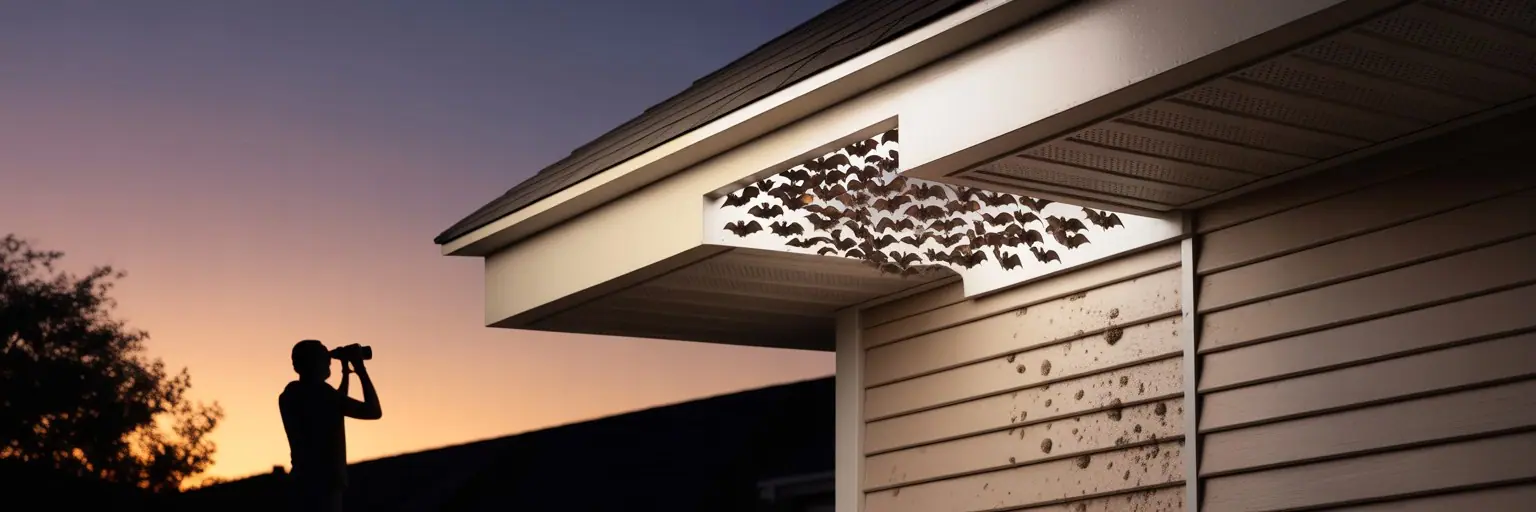
- Soffit and eave gaps: Loose, missing, or separated soffit panels create a protected seam for bats to slip into the roof cavity. A steady stream of bats leaving one spot at dusk often points to a single soffit gap.
- Vents and vent screens: Gable vents, ridge vents, attic fans, and foundation vents with corroded mesh or loose fasteners provide direct access to voids beneath the roof.
- Chimney crowns and uncapped flues: Cracked mortar where crown meets flashing or an uncapped flue gives bats an easy route into chimneys and then into attics.
- Roofline intersections and flashing failures: Valleys, step flashing, and intersections where roof meets wall can separate with age or poor installation and allow passage.
- Gaps around plumbing, wiring, and HVAC penetrations: Retrofits often leave small holes where pipes and conduits pass through exterior walls; those openings connect to attic voids.
- Open windows, vents, and attic access: Upper-story windows or poorly secured attic hatches occasionally admit individual bats, especially near dusk when bats feed close to structures.
How to find the active access point
A careful dusk inspection is the fastest, most reliable method to locate the active entry. Watch the roofline for 20 to 30 minutes starting at sunset and note where bats concentrate as they emerge.
- Evening emergence watch: Position binoculars at a distance and mark the point on the roof where most bats exit. One repeated opening is common for colonies.
- Look for rub marks and guano: Dark streaks on soffits, near vent screens, and below eaves show repeated use. Small granular droppings below an exit are a strong indicator of active roosting.
- Inspect from inside: Photograph travel lanes, droppings, and light gaps in the attic. Technicians use those photos to map the exterior repair plan.
Why attics and roof cavities attract bats
Bats select roosts that offer steady temperatures, shelter from predators, and easy launch points at dusk. Attics check those boxes and are especially attractive during maternity season when colonies seek warm, safe spaces for pups. Because of that seasonality, exclusions must be timed correctly under local wildlife rules.
Contractor records show that a typical scenario with two small colonies requiring full attic exclusion may cost homeowners between $2,000 and $6,000 for exclusion and basic repairs. If insulation is heavily contaminated, professional sanitation and insulation replacement can raise total costs from $5,000 to $13,000 in more extreme cases.
Quick safety steps you can take right now
Do these low-risk actions while you schedule a professional inspection.
- Keep people and pets away from suspected entry zones and the attic to limit exposure to droppings and airborne spores.
- Document emergence: Note the time bats start leaving, approximate numbers, and the exact spot on the roofline they use.
- Do not seal openings while bats are present: Sealing at the wrong time can trap animals inside and may violate local regulations during maternity periods.
- Contain attic access: Lock or otherwise restrict attic hatches until a technician assesses the situation.
What professionals do that homeowners often miss
Licensed bat-removal technicians follow a phased approach: inspection, monitored exclusion, durable sealing, and sanitation when needed. Two details homeowners frequently miss are timing of exclusions and the durability of materials used for sealing.
- Monitored one-way exclusions: Technicians often install one-way devices at active exits so bats can leave at night but cannot return. Monitoring confirms when the roost is vacated before sealing.
- Durable sealing materials: Metal flashing, stainless-steel mesh, and welded chimney caps are used rather than temporary foam or screen that fails within months.
- Sanitation protocols: HEPA vacuuming, negative-pressure containment, and targeted insulation replacement remove guano and fungal spores that pose health risks.
When to call a licensed technician
Call a professional if you see repeated emergence, find accumulations of guano, hear persistent noise in the attic, or suspect contamination of HVAC or insulation. Professionals can advise on legal timing, exclusion strategy, and necessary remediation trades.
For cleanup specifics, our guide on bat guano cleanup and insulation risks explains remediation thresholds and methods. If you need full-roof or attic removal of a colony, see our page on bat colony attic removal for contractor qualifications and sample scopes. For questions about legal timing in Florida, consult our Florida bat laws homeowner guide.
Common mistakes that lead to return infestations
Repeat incidents usually come down to missed details during repair.
- Temporary patches: Thin screen or spray foam over a seam will fail and let bats find another opening.
- Sealing too early: Excluding a roost during maternity season can be unlawful and inhumane and usually results in trapped young and continued noise problems.
- Ignoring HVAC pathways: Contaminated dust and guano in ducts can continue to spread odors and spores even after the visible opening is sealed.
- Poor documentation: Without photos and a written scope, future buyers and insurers will question whether the problem was resolved.
Inspection checklist you can use before hiring a contractor
Bring these items to the inspection so you get a clear, itemized quote.
- Photos or notes from a dusk emergence watch pinpointing the exit area.
- Any interior photos of droppings, runways, or contaminated insulation.
- Questions about timing, warranty, and whether the quote separates exclusion, sanitation, and trades work.
- Ask if the provider uses one-way devices and whether they monitor the roost until vacated.
How much should you expect to pay
Costs vary with roof complexity, colony size, and contamination level. A small, targeted exclusion around a vent can be inexpensive. Full attic exclusion followed by sanitation and insulation replacement will be more costly. Use line-item bids so you can compare exclusion, electrical repairs, and insulation replacement separately.
Frequently Asked Questions
How did bats get into my house through such a small gap?
Bats have flexible shoulder joints and small bodies that let them squeeze through narrow gaps that look insignificant from ground level. Repeated exit points will show rub marks and small accumulations of guano. A dusk emergence watch is the most reliable way to verify the exact opening.
Can I remove bats myself by sealing the hole at night?
No. Sealing a roost while bats are present risks trapping animals and may violate wildlife protections during maternity season. Untrained attempts also increase exposure to guano and the possibility of bites. Use a licensed technician who monitors emergence and installs one-way exclusion devices when appropriate.
Will sealing attic vents cause moisture or mold problems?
Proper sealing preserves designed attic ventilation. Problems occur when vents are blocked without providing alternative airflow. Ask the technician to evaluate ridge and soffit ventilation and to include ventilation checks in the scope so you do not trade one problem for another.
How much does it cost to get bats out and clean up guano?
Prices vary by infestation severity. Small exclusions can cost a few hundred dollars. Homeowner case records show full exclusions sometimes fall between $2,000 and $6,000, while heavy sanitation and insulation replacement can range from $5,000 to $13,000 in more extreme cases. Get written, itemized estimates to compare quotes fairly.
What should I do if I find bat guano in the attic?
Do not disturb the material. Limit access to the attic and contact a remediation professional who can test for contamination and recommend HEPA vacuuming and containment where necessary. Removing contaminated insulation without proper containment increases health risk to occupants and workers.
Conclusion
Knowing the common bat entry points lets you target inspections and find the most effective repairs. Start with a dusk emergence watch, document rub marks and guano, and insist on durable, metal-based exclusion materials and monitored one-way devices. If contamination is present, include sanitation and insulation replacement on the same line-item estimate so you solve the problem once and avoid repeat visits.