
How Long Can Rats Live in an Attic?
- Pro Wildlife Removal
- Blog
Why the question “How long can rats live in an attic” matters to homeowners
How long can rats live in an attic depends on food, water, shelter, and whether you interrupt their access. If you hear nightly scratching or find fresh droppings, those signs mean rats can survive for months to years inside a home when conditions are right. Homeowners who wait often face larger cleanup bills because nests and contaminated insulation accumulate over time.
Typical lifespan of rats in the wild and inside houses
Wild rats generally live one to two years. In sheltered settings such as attics the lifespan for an individual rat can extend toward the upper end of that range because predators and weather are less of a threat. That does not mean an attic infestation stays static; populations change as litters are born and older animals die.
Roof rats versus Norway rats: where they live and how that affects survival
Roof rats favor attics and rafters while Norway rats prefer ground-level burrows and crawlspaces. Roof rats’ preference for high, dry spaces helps them avoid flooding and many predators, which increases survival chances inside a roof cavity. Our local service data shows roof rats account for roughly 70 percent of attic calls, which explains why attics are often long-term refuges for them.
How food and water shape how long rats can stay in an attic
A stable food and water supply is the single biggest factor. Attics connected to kitchens, to HVAC returns, or with easy access to attic vents may let rats reach pet food, stored pantry items, bird seed, and condensation from HVAC equipment. One documented local case cited on our site showed infestations escalate quickly when outdoor fruit and unsecured trash provided continuous calories.
- Unlimited food: With daily access to food, rats reproduce and replace dying adults, keeping a population active for years.
- Limited food: If food is scarce, individuals may live several months but population size will decline without reproduction.
- No water: Rats can survive longer without direct water if they get moisture from food, but lack of water shortens survival to weeks rather than months.
How nesting and insulation affect survival time
Attic insulation provides warmth and nesting material. Contaminated insulation with nesting material, urine, and droppings can hide multiple generations. Several community-sourced removal reports on our site show that untreated attic infestations frequently require insulation replacement during cleanup, a cost that can move from hundreds to thousands of dollars depending on the extent of contamination.
Real-world cost and escalation examples that show why early action matters
Community reports and local case files contained in our blog reveal how quickly problems grow. One homeowner faced an itemized exclusion and attic restoration bill approaching $11,000. Another multi-unit property reported roughly $30,000 in structural damage and about $5,000 in cleanup and temporary housing after a severe infestation. Those figures illustrate that an attic infestation left unchecked can balloon from a DIY trap job into major structural and remediation costs.
How quickly a single pair can become a household problem
Rats reproduce rapidly in favorable conditions. University extension sources show rats can have litters of four to twelve pups and in warm climates produce multiple litters per year. That means one breeding pair in an attic can turn into dozens within months, particularly when food and shelter are abundant. For details about reproductive speed see our related guide on how fast rats reproduce.
Signs that rats have been living in an attic for a long time
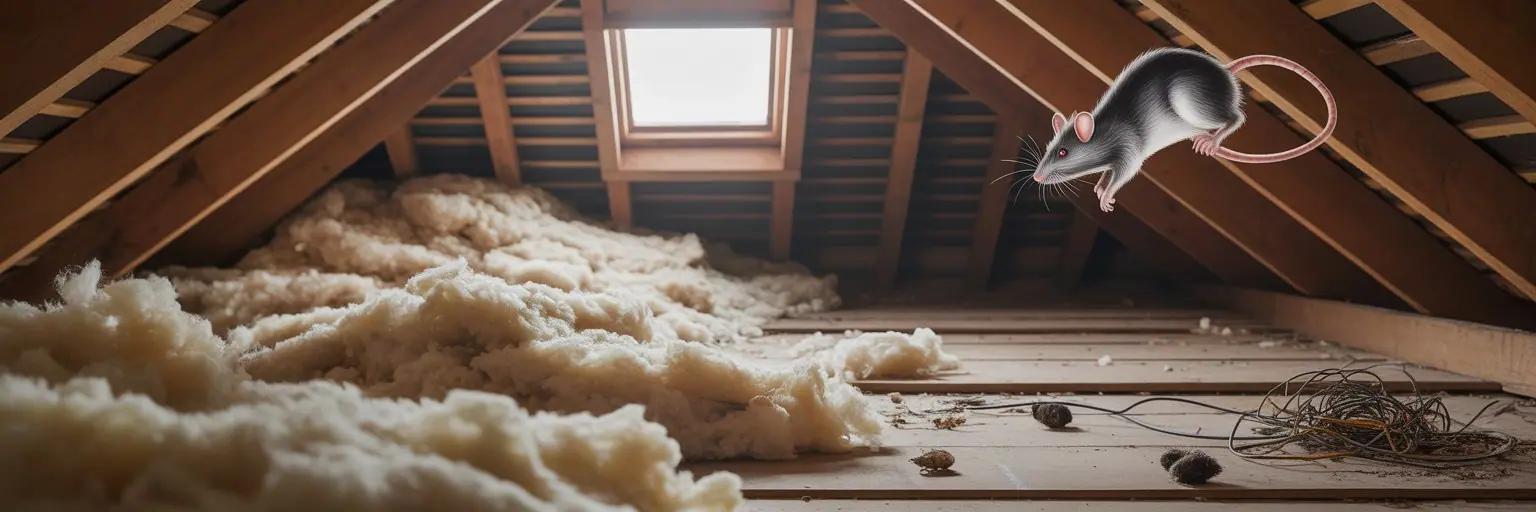
Long-term occupancy leaves distinct traces. Look for heavy, compressed nesting areas in insulation, layered droppings under joists, chewed wiring, and greasy runways along rafters. If you find these signs, the population is likely established rather than transient. Our article on rats in attic signs walks through the indicators technicians use to estimate occupancy length.
Electrical and fire risk from long-term infestation
Chewed wiring is a frequent discovery in long-term attic infestations. Our content on rat damage to electrical wiring documents incidents where chewing led to exposed conductors and increased fire risk. When you see insulation insulation staining or suspect wiring damage, call an electrician as part of remediation planning.
How long can rats survive without food or water in an attic
Survival without food or water varies by health and temperature. Healthy adult rats may survive several days without food and up to about a week without direct water, especially if they can access moist foods or condensation. In cold conditions or for juveniles, those windows shrink. That means short-term exclusion alone may not clear an attic population if hidden food sources remain.
What short-term deterrents do and do not accomplish
Sound devices, lights, and temporary traps sometimes push rats out for a few days, but these measures rarely solve the underlying problem. Without sealing entry points and removing attractants, rats usually return. For a durable solution combine trapping with permanent exclusion and sanitation steps described in our exclusion guide at rat exclusion, prevent reinfestation and damage.
Step-by-step plan to shorten how long rats can live in your attic
Follow these practical steps to remove rats and reduce the chance they come back.
- Document and inspect.Record droppings, damage, and active noises. A professional inspection will identify species, entry points, and contamination scope.
- Stop the food and water sources.Bring pet food indoors, secure trash, remove bird feeders, and fix plumbing leaks or HVAC drip lines that provide moisture.
- Remove access.Repair soffits, vents, and gaps larger than 0.3 inches. See our article on rat entry points for common weak spots to inspect and seal.
- Trap and monitor.Use targeted traps inside and around the attic perimeter. Professionals balance trapping with exclusion so you do not seal animals in place.
- Sanitize and replace contaminated materials.Once the population is removed, remove contaminated insulation, disinfect surfaces, and repair wiring or structural damage.
Common counterpoints and uncomfortable truths
Not every homeowner needs full remediation immediately. Small, early infestations can be resolved with targeted trapping and sealing. However community reports show baiting alone often fails when entry points and attractants remain. Also, poison can create hidden carcasses in attics and walls, which increases odor and cleanup costs. These trade-offs explain why many cases ultimately require exclusion and insulation replacement.
Frequently Asked Questions
How long can rats live in an attic without food or water?
Adult rats can survive several days without food and about a week without direct water if they obtain moisture from foods or condensation. Juveniles and older rats die sooner. Lack of food and water reduces populations but does not guarantee eradication if hidden sources remain.
Can rats survive in insulation through winter?
Yes. Insulation provides warmth and nesting material, allowing rats to survive colder months. In temperate climates rats may breed year-round, and attic occupancy can continue until you remove food access, seal entry points, and clean out nests and contaminated insulation.
Will trapping one rat solve an infestation?
Catching a single rat reduces visible activity but rarely ends an infestation unless you also identify and seal entry points and remove attractants. Many cases involve multiple adults or breeding females, so a full inspection is the safest way to confirm success.
How can I tell if rats are still active in my attic after I trap some?
Look for fresh droppings, new chew marks, grease trails along rafters, recent nesting, and nightly noises. Use motion-activated cameras or a professional follow-up inspection to verify the attic is clear before replacing insulation.
How long after removal should I replace insulation?
Replace insulation once you confirm the attic is free of rodents and wiring repairs are complete. Contaminated insulation holds pathogens and odors; many professionals recommend removal immediately after exclusion and sanitation to prevent future health issues.
Conclusion
The answer to how long can rats live in an attic is not a single number. Individual rats may live up to a year or two in the sheltered attic environment, and populations can persist indefinitely when food, water, and nesting materials are available. Early detection, targeted trapping, permanent exclusion, and proper sanitation shorten that survival time and reduce remediation costs.
If you are seeing signs of activity, start with a documented inspection and a plan that separates trapping from exclusion and cleanup. For guidance on identifying entry points and planning repairs, review our resources on rat entry points and rat exclusion and prevention.