Opossums in Attics
- Taroneh homberg
- Blog
Why opossums in attics are a hidden, urgent problem
If you suspect opossums in attics, you are not alone. The site search returned two related posts on opossum removal and locations, and the sitemap shows fifty site pages covering attic wildlife, exclusion, and cleanup.
This article explains how to confirm an opossum in your attic, the humane and legal removal options, cleanup and repair priorities, and prevention steps that stop repeat visits.
How to tell if opossums are in your attic
Opossums are not typical attic residents, but they do end up inside attics, crawl spaces, and soffits when they can find an entry point. Look for these signs.
- Noises: soft scraping or slow thumping at night or early morning. Opossums move more deliberately than raccoons; sounds are often heavier and less constant than rodent scurries.
- Odor: a sour, musky smell from urine or a hidden carcass. Opossums in tight spaces can create persistent odors that cleaning alone will not remove.
- Droppings and tracks: larger, tubular droppings than mice and visible paw prints in dust or insulation.
- Damage: torn insulation or nesting material pushed into corners, and small tear marks near soffits and vents where an opossum could have squeezed through.
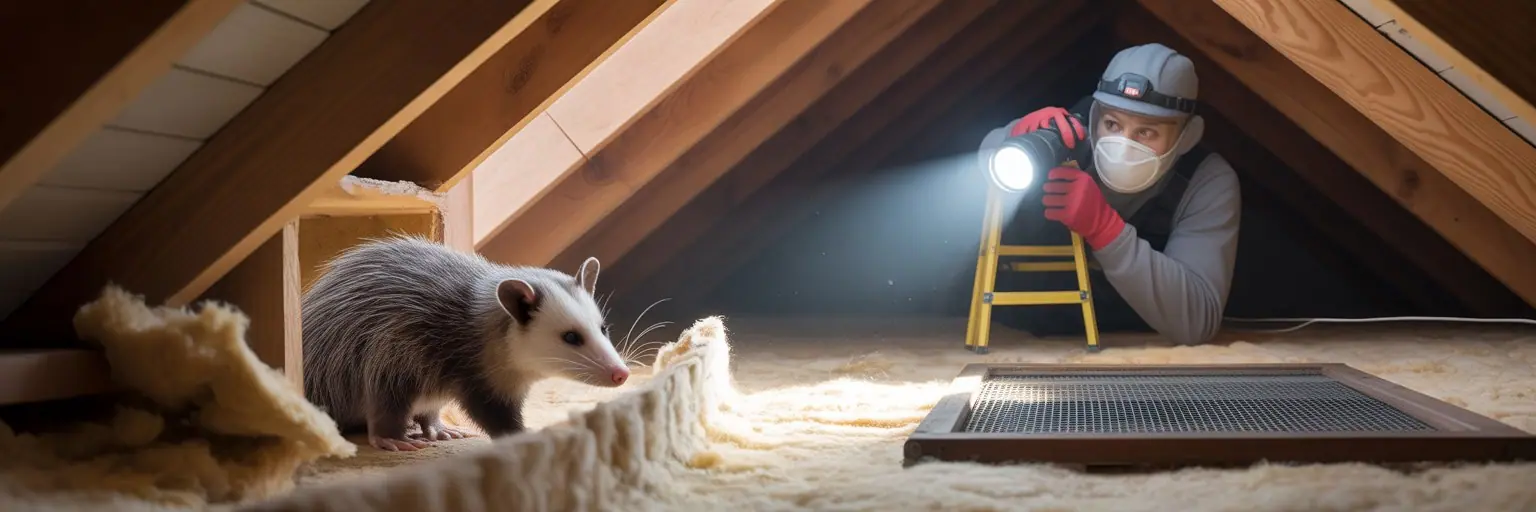
If you hear slow, infrequent movement and find larger droppings rather than tiny pellets, an opossum should be on your list of suspects. Avoid poking or shining bright lights into the attic; that can scare a sleeping animal into a dangerous exit route or deeper into the structure.
Immediate safety steps to take tonight
Before you call a professional, take these actions to reduce risk and preserve evidence that helps removal.
- Close interior doors to confine the animal to one general area and keep pets and people away from attic access points.
- Turn off attic fans and avoid using power tools that could startle the animal into moving unpredictably.
- Note the times you hear noises and where the sound seems loudest. This helps a technician find the entry point faster.
- Do not attempt to trap or handle the opossum yourself. Many jurisdictions restrict relocation, and improper handling risks injury to you and stress to the animal.
Why professional removal and exclusion matter
A wildlife pro does three things you cannot skip: locate and seal the entry point, remove the animal humanely or coordinate with a rehabilitator when needed, and perform or recommend cleanup and insulation replacement if contamination exists. That three-step approach is the standard recommended throughout the site’s attic and wildlife posts.
Attempting DIY exclusion without removing the animal first can trap an opossum inside. That often leads to worse odors, damage, and more costly repair work. If you are considering a pro, see our guide on what to expect during a wildlife removal inspection for realistic timelines and cost drivers.
Humane removal options and legal caveats
Opossums are handled differently depending on state and local laws. In many places, trapping and relocating wildlife requires a permit. Even where relocation is allowed, moving an opossum can reduce its survival chances. That is why humane exclusion and one-way exits paired with monitoring are often safer.
- One-way exclusion devices: let an opossum leave but not re-enter. These are effective when the animal is free to exit and nests are not occupied by dependent young.
- Live trapping with licensed transfer: used when exclusion is not possible. A licensed trapper or rehabilitator will follow local regulations and health guidelines.
- Cooperation with rehabilitators: necessary if you find young opossums or an injured adult. The site’s resources recommend contacting licensed rehabilitators rather than handling young animals yourself.
For more on humane options and why DIY can go wrong, read The Dangers of DIY Wildlife Removal. That post highlights legal risks, disease exposure, and how incomplete exclusion leads to repeat visits.
Cleaning, decontamination, and attic repair priorities
After removal, cleanup is the urgent task. Opossums carry ticks, fleas, and parasites, and their droppings and urine can soak insulation and create odors that standard household cleaning cannot remove. Priorities are clear.
- Remove contaminated insulation: insulation saturated with urine or feces should be removed and replaced. This prevents lingering odors and health risks.
- Sanitize surfaces: a professional crew will use appropriate PPE and disinfectants for guano, droppings, and urine.
- Repair entry points: replace damaged soffits, vent screens, or roof flashings. Proper materials and techniques prevent re-entry.
See the site’s article on attic wildlife cleanup cost in Florida for typical scope items and why cleanup often equals more than the initial removal fee.
How to prevent opossums from returning
Prevention is a mix of habitat modification and small repairs. Opossums are opportunistic. Remove the reasons they choose your property.
- Secure food sources: remove outdoor pet food at night, secure trash with tight lids, and remove fallen fruit or compost that is accessible overnight.
- Close small openings: screen vents, seal gaps in soffits, and use heavy gauge hardware cloth on exposed crawlspaces. Small openings invite not only opossums but also rodents and snakes.
- Eliminate easy shelter: stack wood away from the foundation, clear brush piles, and secure under-deck storage so opossums do not nest nearby.
When an opossum has young: what to do
Opossums sometimes leave young behind while foraging. If you find dependent babies, do not attempt to move them. Contact a licensed wildlife rehabilitator immediately. The site’s content recommends observation from a distance for a few hours if the animal is not injured; often a parent will return. If you find injured or obviously abandoned young, call professionals for species-specific instructions.
Cost considerations and timeline
Costs vary widely by region and by whether cleanup and repairs are required. Expect the following phases in the timeline.
- Inspection and detection: same day to two days depending on scheduling.
- Removal or exclusion: typically scheduled within 24 to 72 hours after inspection if the animal is active and accessible.
- Cleanup and repairs: can extend the project by several days to a week depending on contamination and repair scope.
For ballpark figures and line items that drive cost, consult the site article on how much wildlife removal costs. That page explains inspection fees, exclusion device costs, and the premium for full attic decontamination and insulation replacement.
Internal links that help you next
These related posts on the site are useful for readers dealing with attic wildlife and opossums. Each link provides step by step guidance for the issue mentioned.
- How to Get Rid of Opossums — prevention and humane options
- Opossums Under House and Crawl Space Removal
- The Dangers of DIY Wildlife Removal — why call a pro
Frequently Asked Questions
How can I tell if the noise in my attic is an opossum or a raccoon?
Opossums tend to move slowly and make heavier, less frequent thumps. Raccoons create louder, more active scratching and can be seen at night on roofs or in soffits. If droppings are present, opossum droppings are tubular and larger than mouse pellets. A professional inspection will identify the species quickly and recommend the right exclusion method.
Can I trap and relocate an opossum myself?
Trapping and relocating wildlife is regulated in many areas and is not recommended without a permit. Relocated opossums often fail to survive in unfamiliar territory. The more humane and effective approach is professional live-capture followed by release by licensed personnel or exclusion that allows the animal to leave on its own when allowed by local law.
What if I hear opossum noises at night but do not see entry points?
Noisy activity without obvious entry often means the animal is using soffits, ridge vents, or weak roofline seals. Schedule a professional inspection. Technicians use binoculars, thermal cameras, and attic checks to find small gaps and soft materials that animals exploit for entry.
How long after removal should I wait to replace insulation?
If insulation is contaminated by urine, feces, or nesting material, replace it as soon as possible. Leaving contaminated insulation risks lingering odors and parasitic infestations. A sanitized time window is not reliable; replacement is typically recommended immediately after removal and disinfection.
Are opossums dangerous to pets and people?
Opossums are generally nonaggressive and can actually reduce tick populations. However, they can carry fleas and parasites and will defend themselves if cornered. Keep pets away from infested areas until a professional has cleared the attic and treated for parasites if necessary.
Why are there so few Reddit threads about opossums in attics?
During research, a targeted Reddit search returned no prominent threads about opossums in attics. Homeowners often discuss this in local Facebook or neighborhood groups instead. That lack of broad threads means you may find faster, region-specific advice by contacting local wildlife control or community pages rather than national forums.
Conclusion
Opossums in attics are an unsettling problem, but you can manage and prevent it with the right sequence: confirm signs, follow immediate safety steps, hire a licensed pro for humane removal and exclusion, and complete cleanup and repairs. The site’s sitemap shows many related resources, including guides on opossums under crawl spaces and wildlife cleanup costs that will help you plan the full remediation. If you suspect an infestation, prioritize a professional inspection. Acting quickly reduces damage, health risk, and long-term costs while keeping removal humane and legal.