Signs of Raccoons in Your Home
- Pro Wildlife Removal
- Blog
Why signs of raccoons in your home matter
If you are seeing strange noises at night, shredded insulation, or tracks around your foundation, those are common signs of raccoons in your home. Homeowners who ignore early indicators often end up with chewed wiring, heavy sanitation bills, and families of animals trapped inside walls or attics. The sooner you identify the specific signs and act correctly, the lower the chance of extensive repairs and health risks.
Common visual and sensory signs to look for
Start with a simple, systematic sweep of likely problem areas. Raccoons leave a handful of repeatable clues that differ from rodents, squirrels, or opossums.
- Droppings and urine smells: Raccoon droppings are larger than rat droppings and often appear near entry points or under eaves. Strong ammonia or musty odors in attics and crawl spaces can indicate long-term occupancy.
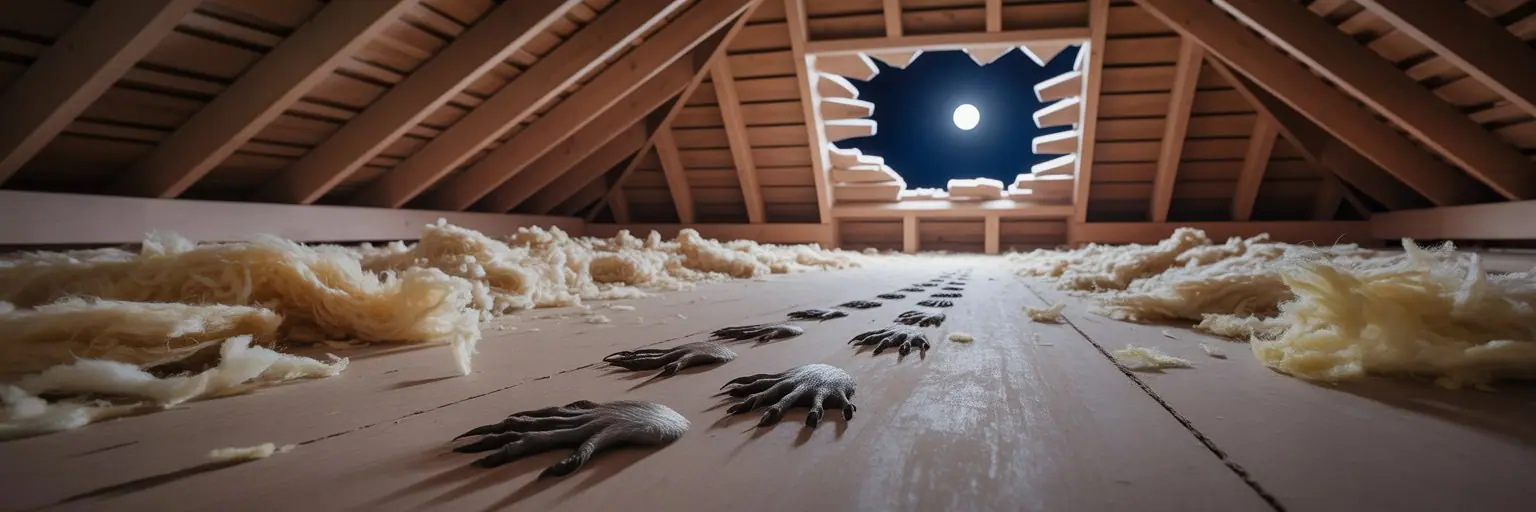
- Shredded nesting material: Torn insulation, pulled-up attic batting, and ripped cardboard inside wall cavities point to denning. Several documented jobs show insulation replacement as a major cost when animals have nested for months.
- Tracks and tail marks: In soft soil or snow you may see five-fingered handlike prints. Tail drag marks near foundation vents or deck skirting are another clue.
- Damage to soffits and vent screens: Raccoons commonly pry open weakened soffits and roof vent boots. Check for sagging or torn areas along the eaves and around chimneys.
- Noises at night: Heavy thumps, tearing, and kit vocalizations during dusk to dawn are strong signs of raccoon activity in attics or roofs. For more on sounds and how to interpret them see our guide on raccoon noises at night.
How professionals and homeowners document occupancy
Before sealing or attempting removal, document what you find. This protects you legally and ensures the right method is used.
- Trail cameras: A short motion-triggered camera session can confirm species and activity times without human risk. Community posts repeatedly recommend cameras to avoid mistaken identification.
- Photograph damage and droppings: These images help inspectors determine whether sanitation or insulation replacement is necessary.
- Time logs: Note when you hear or see activity. Raccoons are nocturnal; repeated sounds between dusk and dawn raise odds they are present rather than just a transient visitor.
What raccoons in the home usually cost and why
Costs vary by location and the damage level, but specific ranges help you prepare. Inspections are commonly in the $75 to $250 range. Targeted removal visits often start around $150 to $600. Sanitation and pest remediation after extended occupancy frequently range from $300 to $2,000, and in extreme attic contamination cases homeowners have reported bills up to $11,000 for full cleanup and insulation replacement. Getting itemized quotes is essential so you can compare inspection, removal, exclusion, and sanitation separately.
Why a staged approach prevents the worst outcomes
Experienced technicians follow three distinct steps: confirm occupancy, exclude animals humanely, then remediate contamination and repair damage. Skipping any step increases the chance of trapped young, unresolved attractants, or incomplete cleanup that causes recurring problems.
Step 1: Confirm occupancy and identify entry points
Inspections check soffits, chimney caps, roof vent boots, and areas under decks or porches. One homeowner traced repeated attic visits to an apple tree about 15 feet from the roofline. Small overlooked gaps are why inspections pay for themselves.
Step 2: Remove or exclude animals legally and humanely
Depending on local law and whether dependent young are present, professionals use one-way exclusion devices, targeted trapping, or temporary deterrents. Do not seal holes until you are sure no dependent young remain. Community accounts warn that premature sealing often leads to trapped kits and a worse cleanup job.
Step 3: Sanitation and repairs
When raccoons have nested, removal of contaminated insulation, cleaning of droppings, and HVAC duct checks are common. If fleas or ticks surface after discovery, pest remediation may be necessary. Ask providers to list sanitation as a separate line item so you understand scope and cost.
Immediate safety actions you can take
While you arrange inspection, do these low-risk actions to reduce harm to people and animals.
- Secure attractants: Bring pet food indoors, secure trash, and remove bird seed to reduce repeated visits. Site case studies show removing food often dramatically reduces return activity.
- Limit access to effected rooms: Keep children and pets away from rooms under active attics or crawl spaces.
- Do not seal holes immediately: Blocking exits while animals are inside can trap young and create decomposing remains that dramatically increase cleanup costs.
- Document sounds and sightings: Use short videos or notes to help the inspector determine timing and potential breeding status.
DIY versus professional removal: where DIY commonly fails
DIY exclusion and trapping can work for simple, clear-cut problems, but homeowners frequently make mistakes that increase costs or risk animal welfare. Common DIY failures include sealing during breeding season, using improper materials that raccoons quickly breach, and attempting sanitation without proper PPE. Hiring a licensed wildlife removal provider reduces legal and safety risks and usually includes warranties on exclusion work. For a comparison of costs and when to call pros see our post on how much wildlife removal costs.
Internal links for further reading
If you want deeper, related guidance, these pages on our site are the most relevant next reads. They explain entry points, attic selection, and under-deck denning in detail.
- How raccoons enter homes — step-by-step entry point checklist and photos.
- Raccoons under deck — why decks attract raccoons and safe exclusion methods.
- Attic wildlife cleanup costs — itemized sanitation and insulation replacement examples.
Uncomfortable truths and caveats
Not every noisy night means a raccoon family. Squirrels and large rodents can create similar sounds, and transient raccoons sometimes investigate roofs without denning. Conversely, passive deterrents like lights or recorded noise rarely solve the problem if entry points remain. Several documented community cases show animals return within weeks when repairs are incomplete or attractants stay in place.
Signs that require immediate professional attention
Call a licensed specialist immediately if you see any of the following: chewed electrical wiring or flickering circuits, brown stains or sagging ceiling areas, strong ammonia odors, visible fleas or tick spikes, or loud thumping that suggests structural damage. These issues indicate hazards beyond nuisance activity and justify urgent inspection and remediation.
Frequently Asked Questions
How do I keep raccoons out from under my deck without harming them?
Remove food and shelter attractants first and document activity with photos or a camera. If no dependent young are present, install durable skirting such as galvanized hardware cloth anchored to joists. Many homeowners report success combining attractant removal with professional exclusion. If you are unsure about breeding status, contact a licensed wildlife removal provider first.
Can I seal attic vents or soffits myself if I hear noises at night?
No. Sealing vents or soffits while animals are inside can trap dependent young and create legal and sanitation problems. Document the sounds and schedule an inspection. A professional will confirm occupancy and use one-way exclusion methods or trapping where allowed before permanent sealing.
What does raccoon poop look like and where will it be found?
Raccoon droppings are larger than rodent droppings and may contain undigested bits of fruit, seeds, or insect remains. Look for droppings near entry points, along rooflines, under eaves, and around crawl space openings. Photograph samples for the inspector rather than handling them directly.
How long does it take to remove raccoons from an attic and finish repairs?
Inspection is often same day to one week. Removal strategies take one to 14 days depending on whether one-way devices or trapping are used. Exclusion repairs typically take one to seven days. Sanitation timelines depend on contamination severity and whether insulation replacement is required.
Will raccoons come back after I install skirting or repair soffits?
They can if attractants remain or a secondary access point is missed. A permanent solution combines sturdy exclusion materials, trimming branches that give roof access, and removing food sources. Ask your installer for a short monitoring window and a written warranty on exclusion work.
What should I do if I find baby raccoons under a porch or in an attic?
Contact a licensed wildlife rehabilitator or local animal control immediately. Removing a den with dependent young can be illegal and often leads to mortality. Professionals assess whether the mother will return and advise on appropriate timing for safe exclusion.
Conclusion
Recognizing the signs of raccoons in your home lets you act before damage and sanitation costs accumulate. Look for droppings, shredded insulation, nocturnal thumping, and damaged soffits or vents. Document evidence, secure attractants, and schedule a professional inspection that separates inspection, humane removal, exclusion repairs, and sanitation into clear line items. Addressing the problem correctly reduces the chance of repeated visits and costly remediation.