How Bats Enter Homes
- Pro Wildlife Removal
- Blog
Why understanding how bats enter homes matters
If you are asking how bats enter homes, you are not alone. Homeowners find bats in attics, behind soffits, or near chimneys and want a clear, practical explanation. Bats look for warm, dark cavities with easy exit routes at dusk. Ignoring the first signs can turn a handful of droppings into a contaminated attic and a much larger bill later.
How bats enter homes: the most common entry points
Bats do not force large holes. They use narrow gaps and repeated flight paths. The same small defects that are invisible from the yard are often wide enough for a bat to squeeze through.
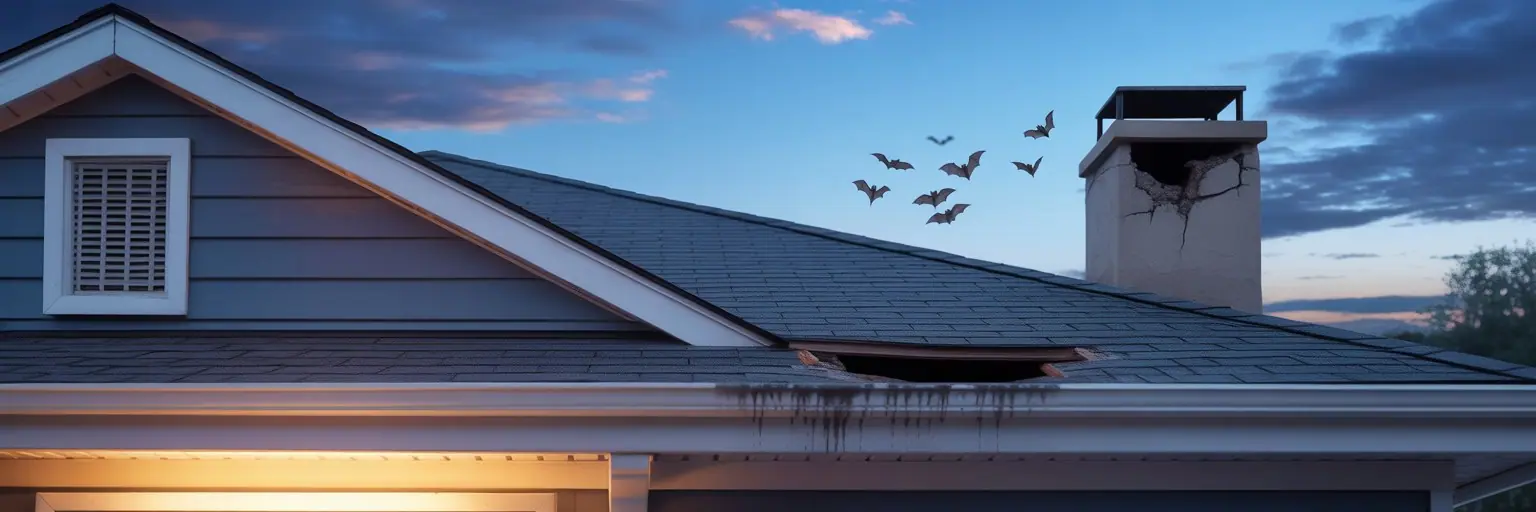
- Soffit and eave gaps: Loose or missing soffit panels and gaps where the roof meets the wall are common. Service reports show colonies using a single gap behind a soffit for months before discovery.
- Vents and vent screens: Unscreened or broken gable, ridge, attic, and foundation vents give bats direct access to cavities.
- Chimney crowns and flues: Cracked or uncapped chimney crowns let bats enter through the gap between masonry and flashing.
- Roofline intersections and flashing failures: Gaps where flashing, valleys, or roof penetrations meet the wall are frequent entry routes.
- Gaps around plumbing, wiring, and HVAC penetrations: Small holes left during retrofits provide travel corridors from exterior voids into attics.
- Open windows and doors: Less common for attics, but basement, garage, or upper-story windows left open near dusk can allow individual bats inside.
Why attics and roof cavities attract bats
Bats pick roosts that meet three needs: shelter, warmth, and easy access to night flying. Attics provide steady temperatures, protected space for maternity colonies, and multiple nearby exits for evening emergence. One documented contractor case showed two colonies requiring full attic exclusion and remediation, with homeowner estimates for the combined work falling between $2,000 and $6,000.
Timing matters. Maternity season concentrates colony size and makes exclusions legally sensitive in many areas. That seasonal timing is one reason professionals sometimes delay exclusion until it is both safe for pups and permitted by local rules.
How to find bat entry points: a practical inspection checklist
A careful inspection finds the subtle evidence bats leave behind. Use this checklist before attempting any repair or cleanup.
- Observe at dusk: Watch the roofline for a steady stream of bats leaving a single spot. Evening emergence pinpoints the general entry area.
- Look for stains and rub marks: Dark streaks near vents, chimney caps, and soffits show repeated use.
- Collect guano clues: Small, granular droppings accumulate near exit points. Large guano deposits over insulation suggest deeper contamination that needs sanitation.
- Check vent screens and caps: Many vents appear intact from the ground yet have loose seams or corroded mesh that bats exploit.
- Inspect attic from inside: Photograph runways, droppings, and light gaps. Professionals map travel routes back to the nearest exterior opening.
If you find guano, treat the situation seriously. Bat droppings can carry fungal spores linked to histoplasmosis and often require professional sanitation when contamination is heavy. See our related guide on bat guano cleanup and insulation risks for remediation thresholds and methods.
Quick, safe steps you can take right now
Do not attempt to seal gaps during active maternity season or to remove bats yourself. Small, safe actions reduce risk while you arrange professional help.
- Keep people and pets away from the attic and the area under suspected entry points to limit exposure to droppings.
- Note emergence times and document the location and approximate number of bats you see each evening.
- Do not use poisons or traps inside living spaces. Those approaches risk injury and are ineffective against roosting colonies.
- Contain attic access with a locked attic hatch or temporary barrier until inspection and exclusion are scheduled.
When to call a professional and what they will do
Licensed bat-removal technicians follow a consistent sequence to solve infestations safely and to prevent return.
- Inspection and documentation: A line-item inspection identifies species, entry points, guano extent, and HVAC risk. Expect photos and a written scope.
- Monitoring and timing: Technicians monitor emergence to plan exclusions at legal and effective times. One-way exclusion devices are often used during evening emergence so bats can leave but not return.
- Durable sealing: Professionals use metal flashing, stainless-steel mesh, and welded caps on chimneys and vents. Temporary foam or lightweight screen often fails.
- Sanitation and insulation work: If insulation or HVAC systems are contaminated, HEPA vacuuming, negative-pressure containment, and insulation replacement may be required. Case records show sanitation and insulation replacement can range from about $5,000 to $13,000 for heavily contaminated attics.
- Follow-up and warranty: Reliable providers include a monitoring window and a written warranty that details what is covered and what actions could void it.
For help finding the right contractor, our page on bat colony attic removal explains vendor qualifications, permitting issues, and sample invoices you can use to compare quotes.
Common mistakes that let bats return
Many repeat infestations happen because one or two things were missed during repair. Watch out for these pitfalls.
- Rushed, temporary seals: Glue or foam over a seam will lift or crumble and bats will find another opening.
- Ignoring HVAC pathways: Bats or contaminated dust that reach ducts can keep odors and spores cycling through living spaces even after the attic appears sealed.
- Sealing at the wrong time: Excluding a roost during maternity season can be unlawful and inhumane. It also traps young, which leads to continued noise and mess until the problem is resolved correctly.
- Not documenting work: Without photos and a clear scope, future buyers or insurers will question whether the problem was handled fully.
Preventing future entries: maintenance checklist
After a professional exclusion, these maintenance steps reduce the chance bats find new access.
- Inspect flashing, soffits, and vent screens annually, especially after roof work.
- Trim tree limbs that overhang or touch the roofline to prevent easy access and wind damage that creates gaps.
- Install chimney caps and maintain vent covers to industry standards.
- Document any roof or attic penetrations done by contractors and ensure sealed penetrations return to metal flashing and welded mesh where required.
Frequently Asked Questions
How did bats get into my house through such a small gap?
Bats can fit through narrow openings because of their flexible shoulder joints and small body size. They find gaps at flashing seams, behind loose soffit panels, and where vent screens have corroded. A focused dusk watch for emergence is the most reliable way to locate the active access point.
Can I remove bats myself by sealing the hole at night?
No. Sealing a roost while bats are present risks trapping animals inside and may violate wildlife laws during maternity season. Untrained attempts also increase exposure to guano and bites. Use a qualified professional who schedules exclusion and follows local regulations.
Will sealing attic vents cause moisture or mold problems?
Proper sealing should preserve attic ventilation. Problems arise when vents are blocked without replacing ventilation pathways. Ask the contractor to evaluate baffles and ridge or soffit ventilation as part of the exclusion scope so you do not trade one problem for another.
How much does it cost to get bats out and clean up guano?
Costs vary by colony size, roof complexity, and contamination. Spot exclusion for a vent can be a few hundred dollars, full attic exclusion a few thousand, and heavy sanitation with insulation replacement can rise to the mid five figures in extreme cases. Get written, line-item estimates and references to compare quotes accurately.
What should I do if I find bat guano in the attic?
Limit attic access and avoid disturbing the material. Contact a bat-removal professional to confirm active roosts and scope cleanup needs. For heavy contamination, professional HEPA vacuuming and negative-pressure containment protect occupants from inhaling spores.
Conclusion
Understanding how bats enter homes is the first step to resolving an infestation safely and cost-effectively. Most bat problems begin at small gaps: soffits, vents, chimneys, and flashing seams. Document emergence, call a licensed technician for inspection, and insist on durable, metal-based exclusion and appropriate sanitation when guano is present. That sequence prevents return visits, protects your HVAC and insulation, and reduces health risk for your household.